
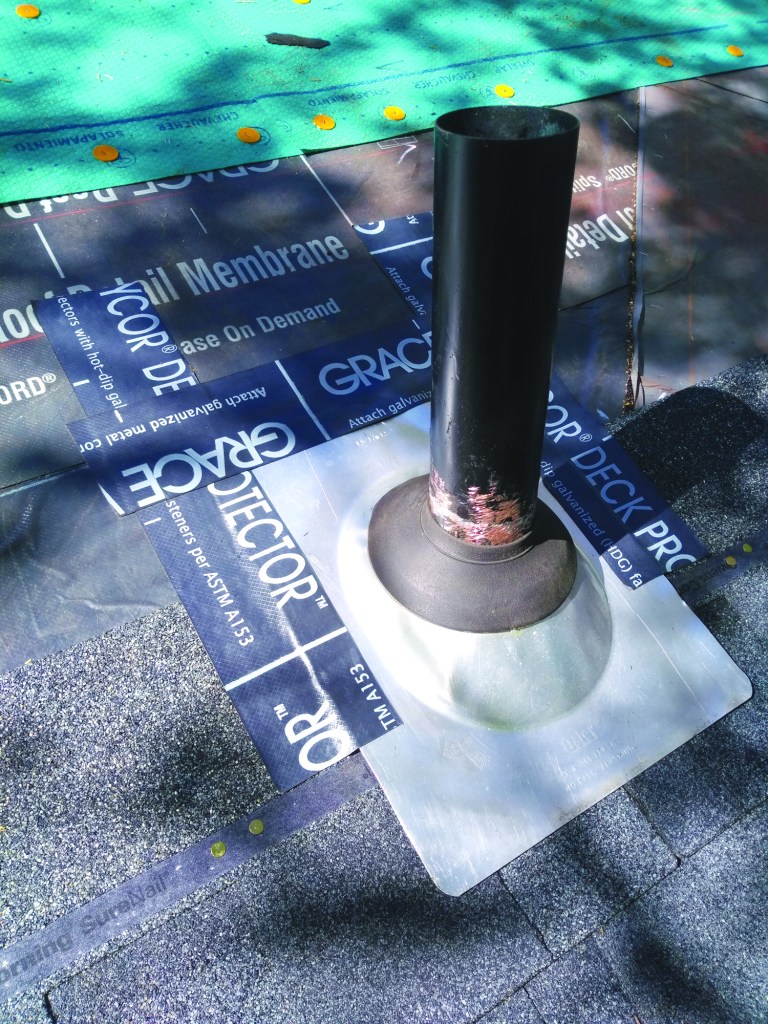
Nearly every house has a plumbing vent pipe through the roof, and most of these pipes are sealed with a boot flashing. On boot flashings, there are just a couple of inches around the metal pan bell to blend with the roof shingles to resist water intrusion. Like most builders, I used to apply plastic roof cement or another sealant to block water from being blown under the bottom edge or in along the side laps of the flashing.
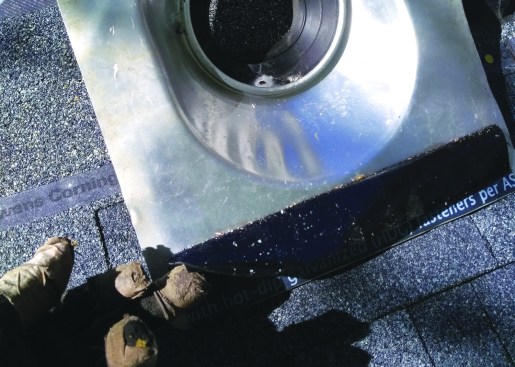
Apply flashing tape to the underside of the lower edge of the flashing, adhering half the strip to the metal.
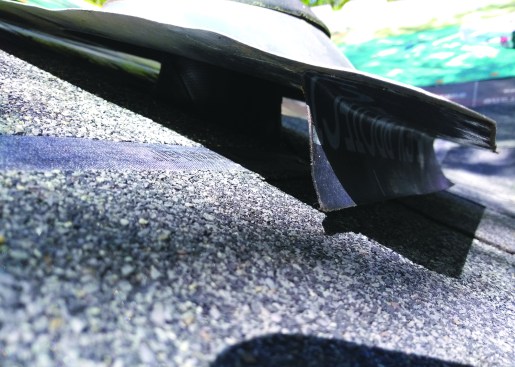
Slip the boot over the vent pipe and press the remaining flap of tape onto the shingles.
But many types of asphalt roof shingles today have warranties of 40 to 50 years—and some even have lifetime warranties—so I’m no longer confident that any sealant I use will remain serviceable and keep the flashing boot leakproof for the full duration of the shingle warranty. Instead, I now use self-adhering, self-sealing flashing tape or strips of waterproof shingle underlayment around the boot flashing. These materials integrate the boot with the surrounding shingles and with the underlayment material on the roof to shed water and to resist wind-driven rain.
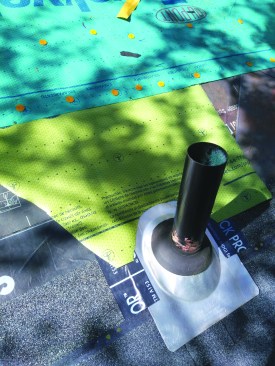
Notch a section of underlayment material around the boot, letting it extend under the next course of roof underlayment above the boot.
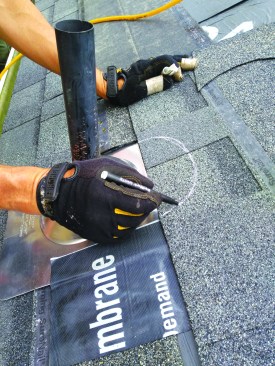
Scribe and fit the shingle courses around the boot in typical fashion.