Thermal mass is a time-honored way to store and release heat as needed in high-efficiency homes. When the home is too hot, a heavy concrete slab or masonry wall can absorb the heat, then release it later when the home cools down. The process can moderate temperature swings, and passive solar builders often rely on this technique to store the energy of sunlight that shines in through south-facing windows. But the process is inefficient, slow, and hard to regulate: Thermal mass “flywheel effects” do save energy, but they can’t always be counted on to keep a home comfortable.
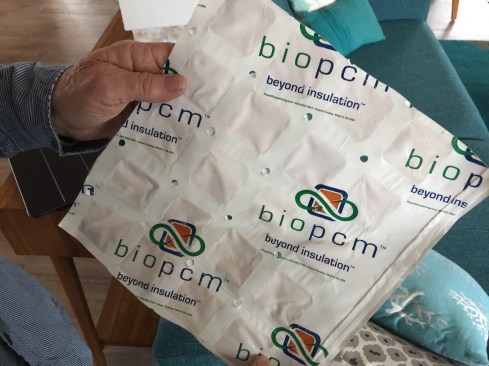
BioPCM, composed of pockets of natural wax in a sheet of plastic material, comes in lightweight sheets with a defined melting point that helps to stabilize room temperatures when installed behind drywall in walls or ceilings. (Photo by Ted Cushman)
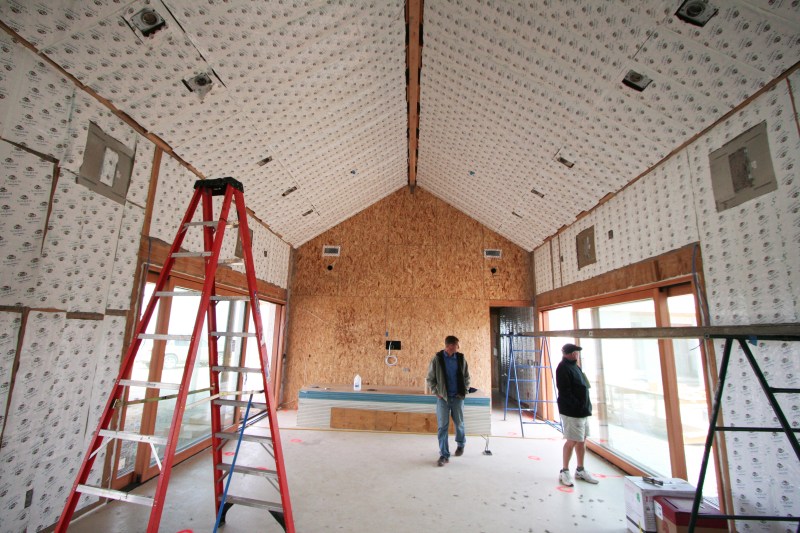
Enter the “phase change material” — a substance, such as wax, formulated to melt or solidify at a specified temperature as a wall or ceiling warms or cools. Just as ice keeps a cold drink near water’s freezing point until all the ice is melted, phase change materials keep a room cool as they melt — or warm the room as they re-solidify. Shown here is BioPCM from Asheville, North Carolina-based Phase Change Energy Solutions, installed in “Casa Aguila,” a showcase Passive House in Ramona, California. Produced in plastic sheet form with pockets of meltable wax, the product comes in various melting points tuned to different set-point requirements, and will help to flatten the temperature curve in a building and stabilize the indoor temperature at the desired level — reducing the load on heating and cooling systems, and helping to prevent short-cycling of equipment.