Resources
Hilti
Silica Dust Knowledge Center
Bosch
Dust Control Knowledge Center
DeWalt
Jobsite Solutions
Hitachi
Don’t Be Left In the Dust
Milwaukee
Silica Dust Extraction Solutions
Makita
Dust Management for Silica Dust
Metabo
Metabo Compliant Solutions
Husqvarna
Silica Dust Control
Skilsaw
Are You OSHA Compliant?
Stihl
Reducing Silica Dust
While noncompliance can cost you a maximum fine of $12,675 (though most people expect OSHA to be lenient in the beginning, except if the violation is willful), repeated or willful violations can reach nearly $127,000. But considering the risks involved, you should be more concerned about your health than your wallet.
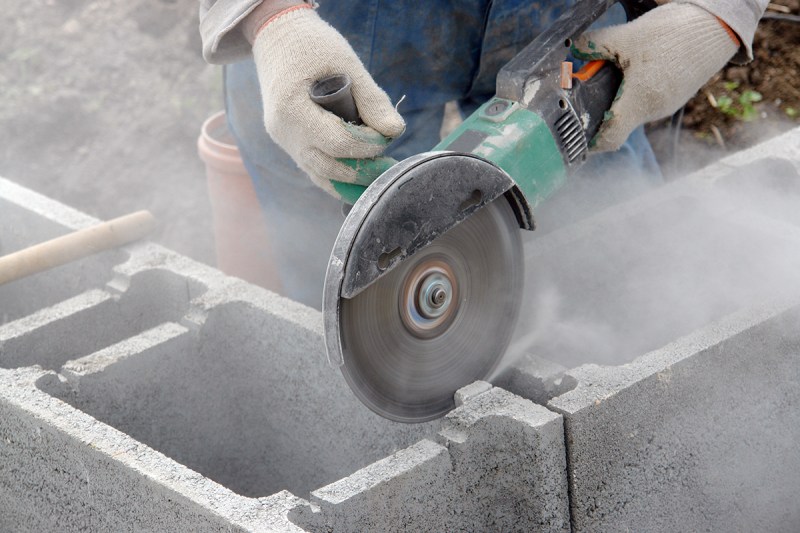
Inhaling silica dust can lead to silicosis, which is an incurable lung disease. Excessive exposure to silica can also lead to lung cancer, kidney disease, and pulmonary disease. Where does silica dust come from? On most residential jobsites, the dust is produced from grinding and cutting concrete, stone, and brick.
The original standard, which was issued in 1971, stated that individuals couldn’t be exposed to more than 250 micrograms per cubic meter of air over an eight-hour period. Now, that limit has been reduced to 50 micrograms.
Compliance is somewhat complicated, at least for larger companies, particularly commercial firms whose employees are exposed to the dust nearly daily. OSHA’s site has some good resources, particularly on this page. On the right column, there’s a link to a downloadable PDF called “TABLE 1”. That table offers means for complying and some guidance with respect to tools and what / how to use them.
The tool companies have good resources as well, some of which include webinars (see sidebar).
Keep an eye out for more on this rule, and how other residential contractors are complying, in upcoming articles.