
Window Air-Sealing Basics

2 MIN READ
Air-sealing a window is distinctly different from flashing  a window. Flashing is done to keep water out. It can’t  completely stop air because the bottom needs to be left open  to allow water to drain out of the assembly. A window’s air  seal, on the other hand, is typically applied from the interior.  The bottom of the window is sealed along the backdam, as  shown in the illustration above. This bead of caulk should  be applied when the window is installed. As a backup to the  inner seal shown above, a fillet of caulk can also be applied in  the corner between the blocking used as a backdam and the  window unit, as shown in the photos above.

Tim Healey

Air-sealing a window is distinctly different from flashing a window. Flashing is done to keep water out. It can’t completely stop air because the bottom needs to be left open to allow water to drain out of the assembly. A window’s air seal, on the other hand, is typically applied from the interior. The bottom of the window is sealed along the backdam, as shown in the illustration above. This bead of caulk should be applied when the window is installed. As a backup to the inner seal shown above, a fillet of caulk can also be applied in the corner between the blocking used as a backdam and the window unit, as shown in the photos above.

SEQUENCE OF STEPS

Window air-sealing typically takes place after the window is installed, but there is one exception: If a backdam is used, it’s best to apply a bead of caulk along the outer face of the backdam while the window is being installed (see “Window Sill Detail,” above).

Instead of a backdam, some builders may use a piece of beveled siding on the rough sill. The bevel slopes to the outside and helps drain away water that might leak through the window. In either case, there is not enough room to seal the inside with foam; the bottom must be caulked tight instead.

The photos below show the steps to sealing a window with foam sealant. As an alternative to foam, you can also use a foam backer rod and caulk, as the last couple of photos demonstrate.
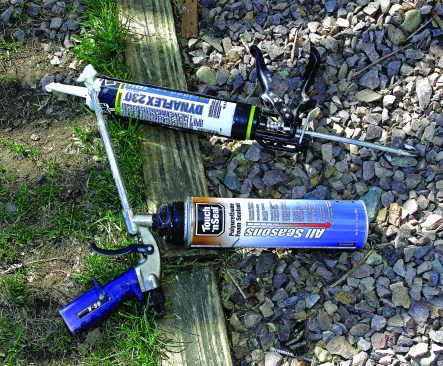
Start with good tools. A professional-grade caulk gun and foam gun (not a  plastic straw) provide needed control

Start with good tools. A professional-grade caulk gun and foam gun (not a plastic straw) provide needed control
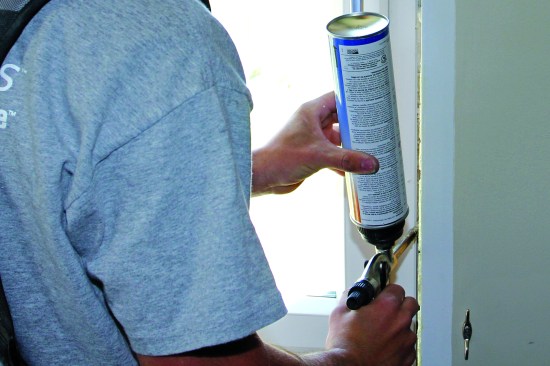
Sealing with foam. On this window, foam is applied  on both sides and across the head. The carpenter started at the upper  right corner and pulled a bead down the right side of the window.

Sealing with foam. On this window, foam is applied on both sides and across the head. The carpenter started at the upper right corner and pulled a bead down the right side of the window.
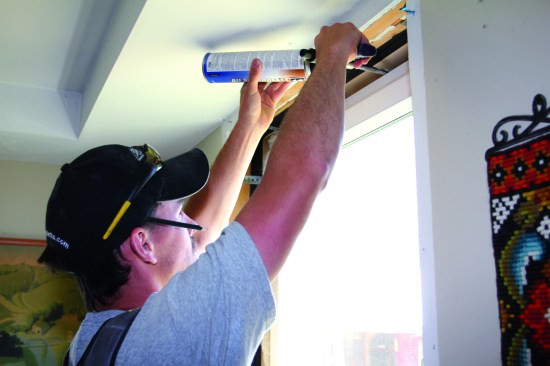
After completing the right side, the carpenter returns to the upper right-hand corner and begins working across the head of the window.
After completing the right side, the carpenter returns to the upper right-hand corner and begins working across the head of the window.

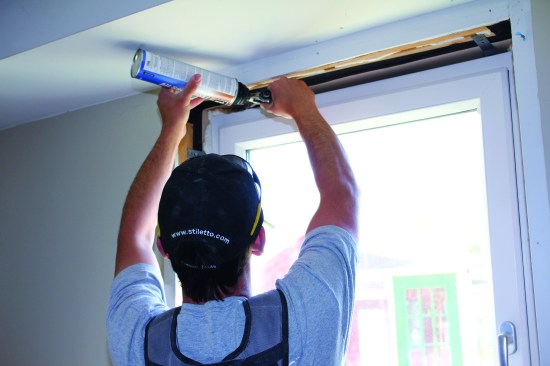
Working steadily, he pulls a bead across the window head. Note that jamb extensions have not yet been installed.
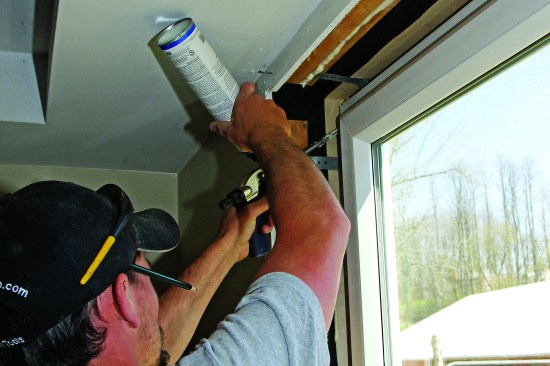
Working steadily, he pulls a bead across the window head. Note that jamb extensions have not yet been installed.

The carpenter has inserted the gun’s tip deep into the gap, so the cavity fills from the back forward as the foam expands. Finally, the carpenter turns the corner and works down the left side.
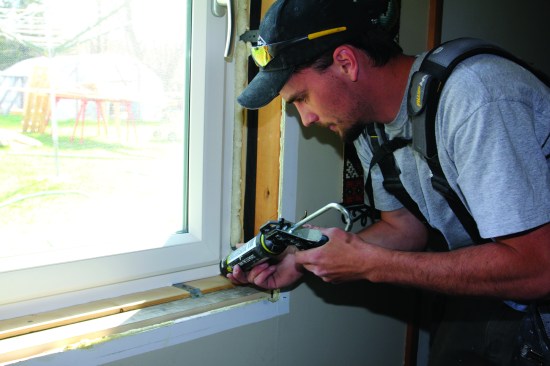
The carpenter has inserted the gun’s tip deep into the gap, so the cavity fills from the back forward as the foam expands. Finally, the carpenter turns the corner and works down the left side.

Complete the air seal by caulking in the corner between the backdam and the window.
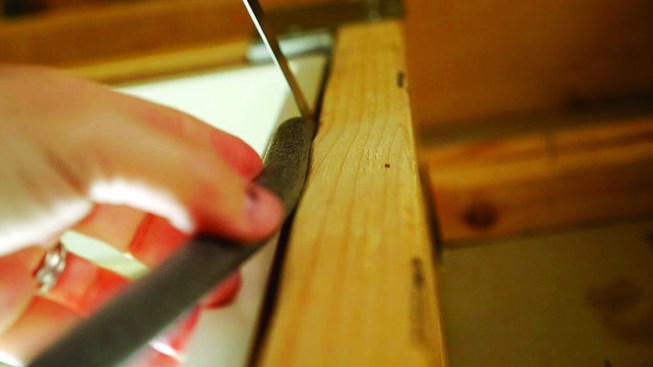
Complete the air seal by caulking in the corner between the backdam and the window.

An alternative to foam. Instead of spray foam sealant, caulk can also be used to seal the wide gap at the sides and head of the window. Many builders prefer the more flexible seal that caulk provides.  But in order to make caulk work, the gap must be filled with a foam backer rod first.

Matt Risinger

An alternative to foam. Instead of spray foam sealant, caulk can also be used to seal the wide gap at the sides and head of the window. Many builders prefer the more flexible seal that caulk provides. But in order to make caulk work, the gap must be filled with a foam backer rod first.
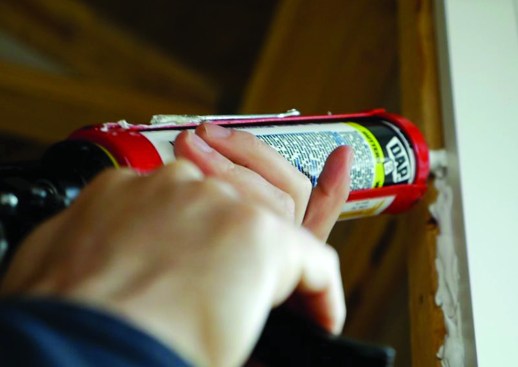
Backer rod is essentially to the caulk's ability to stay flexible and stretch with dimensional changes  fthe framing and window materials over time.

Matt Risinger

Backer rod is essentially to the caulk's ability to stay flexible and stretch with dimensional changes fthe framing and window materials over time.

Register to download and view this article

Get your copy

About the Author

No recommended contents to display.

Upcoming Events