My last two blogs have covered the Tesla/Solar City solar panels on my roof catching fire and igniting the roof shingles and then the follow up where I talked about how painfully slow the response had been. In that blog I related how the crew from Tesla had come to the site to investigate the cause of the fire and supposedly to remove the panels so that I could repair the roof. They completed their investigation but were unable to remove the panels with the limited crew that they’d sent out.
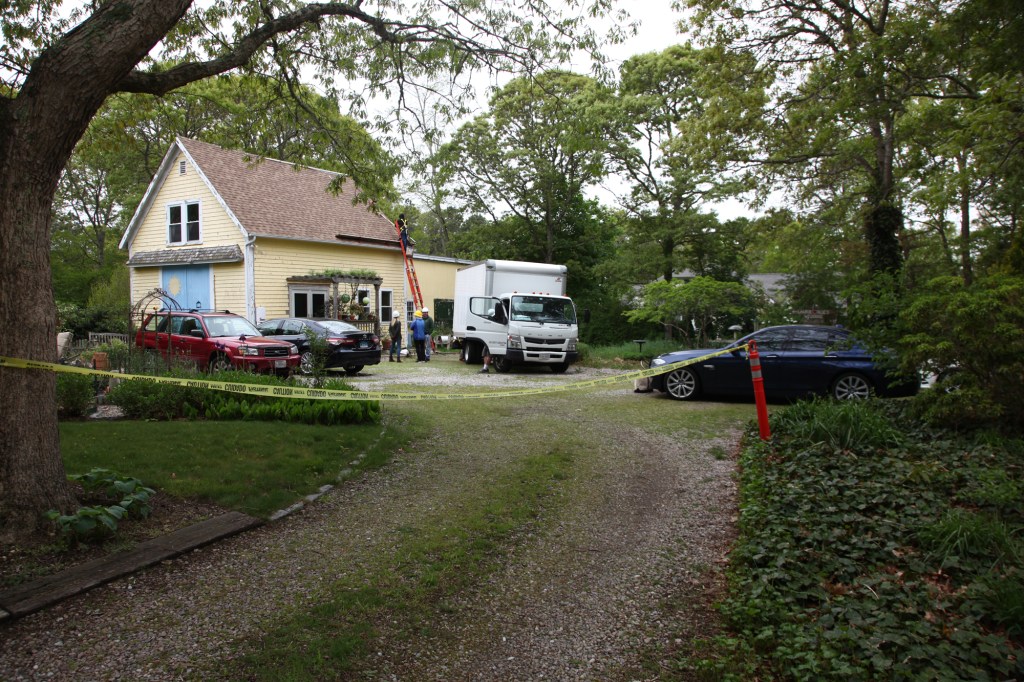
Two months and two days after the fire and almost four weeks from their first attempt, a second panel-removal crew finally arrived. This time they meant business. There were four guys on the removal crew plus a team of investigators from one of the companies whose equipment had been used in the array, and another couple other officials besides. I was in my office working when I heard the vehicles pull into the driveway. I came down the stairs to find yellow caution tape stretched across the door to my studio. In fact the entire perimeter of the driveway “work area” had been taped off. My quiet little property looked like a crime-scene hard-hat zone.
Roe Osborn
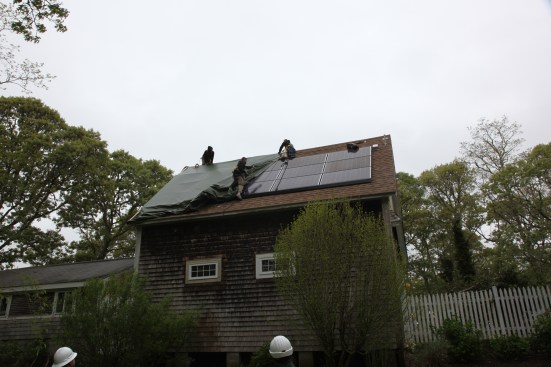
Before the crew could remove the panels, they needed to peel back the tarp that had been protecting the area of the roof damaged by the solar-panel fire.
I knew the safety drill from my work on jobsites with cranes and telehandlers, and I knew right where to find my hard hat. I made a bee line for the workshop, and grabbed the hard hat so that I could walk around and take pictures without being chastised for not wearing the proper safety gear. Camera in hand, I got to the side yard in time to see the roof crew peeling back the green tarp.
Roe Osborn
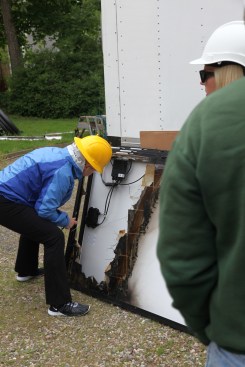
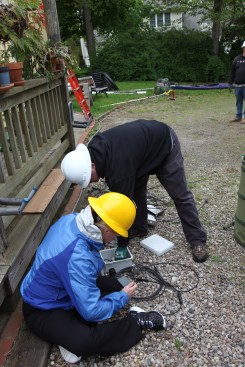
An investigator from the team examines the first solar panel (from the back), after it was taken down from the array.
Roe Osborn
Then the investigator hunkers down on the driveway to get a close look at all the parts involved in the fire.
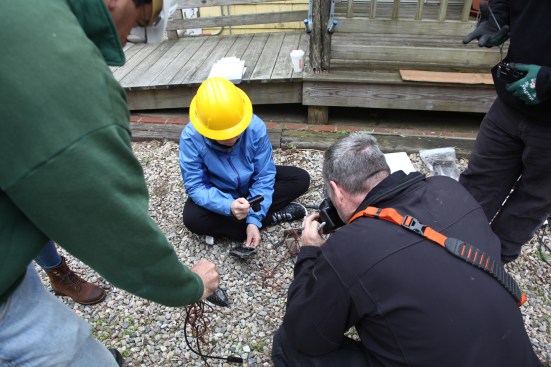
The first panel came down and the investigators went to work immediately. With the panel leaning against the work truck they shot pictures from every conceivable angle. As the crew removed the panels, piles of parts began to accumulate in the driveway. One of the women on the investigation crew plunked down cross-legged on the driveway stone to get a close-up view of the charred parts. Dave, the lead person on the removal crew brought pieces over her, identifying which panel each part came from. She painstakingly examined every burned part, taking numerous close-up photos in the process.
Roe Osborn
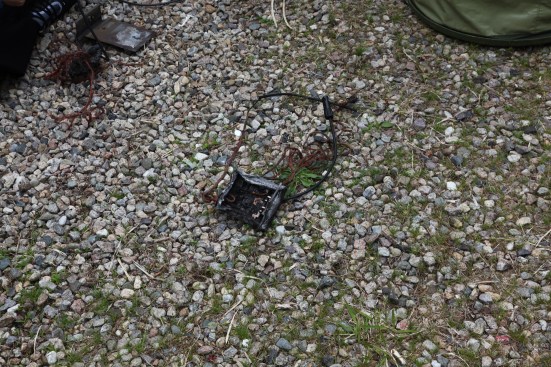
A charred part identified as an optimizer awaits scrutiny from the investigation team.
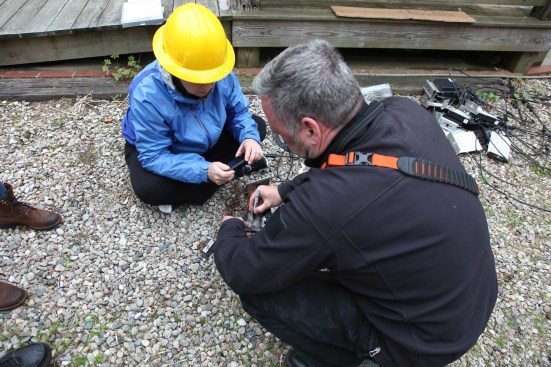
At one point they turned their attention to a badly burned piece of equipment that they identified as an optimizer. I later learned that optimizers are converters installed with each panel to maximize the output of that panel and increase the overall output of the array (someone please correct me if I got that description wrong). As she looked closely at the remains of the optimizer, she pointed to a cylindrical unit on the cable, a connector, noting that it was still intact and had not failed, which meant that most likely it had not been the cause of ignition. With all the intrigue of an NCIS television set, the crew carefully labeled each part and put the part in a zip-lock plastic bag.
Roe Osborn
The team examines all of the burned electrical parts in an effort to determine the cause of the blaze.
Roe Osborn
After examining each part, a member of the team labels the part and places it in a zip-lock bag to keep as evidence.
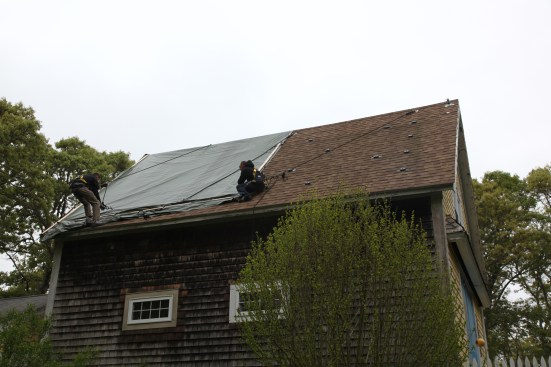
With all the panels removed, the crew re-deployed the green tarp, leaving the panel-mounting “pucks” still attached to the roof. Dave explained that removing them before the roof was reshingled would leave holes for potential leaks. He cautioned that the roofing crew should unscrew the lags holding the pucks in place and not simply yank them out to avoid damaging the framing and sheathing.
Roe Osborn
After removing all of the panels, the crew reattaches the green tarp one last time to protect the roof until the roofers could replace the damaged shingles. The mounting pucks for the panels remained in place until the roofers stripped the shingles from the damaged roof.
Five days later the roofing crew stripped and reroofed the entire side of the building. Luckily the shingles were still available in that color. Shortly before the fire, I’d completed a Q&A piece by Steve Quarles on the fire resistance of asphalt shingles. Little did I know that a short while later I would be witnessing those properties first hand. My insurance company should be pleased that the replacement shingles have a Class A fire rating.
And for the record, so far no one has offered a definitive cause of the fire. Dave, from the panel removal crew, was still leaning toward an animal incursion as being the probable cause, but the birds and squirrels in the neighborhood ain’t talking.
My next decision is whether or not to replace the array. Dave told me that Tesla would replace the array with updated panels, and that he would oversee the installation personally to ensure that everything was installed to the letter. Reluctantly I am leaning toward pursuing that course. My contact person at Tesla told me that they would re-engineer the entire system—basically starting from scratch to make sure that the system was sufficient for my needs, and to make sure all of the background equipment still in place would be compatible with a new system. In the meantime, my electrical meter continues to spin and the days for maximum solar production in this area steadily click by. I hope to report soon that I am once again generating power. For now, I’m standing by, and still not holding my breath.