Airtight, watertight window installations don’t happen by chance. They come from careful prep, precise sequencing, and a healthy respect for building science. Miss a detail, and you risk air leaks, rot, or expensive warranty claims. Here are five of the most common mistakes installers make—and how seasoned pros recommend avoiding them.
1. Flashing the Wrong Way
Improper or incomplete flashing is still the No. 1 source of leaks.
“The biggest thing, especially doing remodeling, is when we take an existing window out, you can see why there’s such a high focus on flashing and the window flashing tape,” says Mike Whalen, lead carpenter at DBS Remodel in Poughkeepsie, N.Y.
Whalen stresses shingle-style sequencing: sill first, then sides, then head flashing. A drip cap is a must. “It’s that positive water flow that you would see on roofing,” he says.
2. Skipping Sill Pans and Drainage
Drainage details are too often overlooked.
“We do [use sill pans], especially on sliders,” Whalen says. “We’ll manufacture those ourselves out of aluminum.”
Veteran consultant Mark Parlee adds that a sloped rough opening sill makes a big difference: “It’s good to tap up on your rough opening sill just a little bit to give it a tilt toward the exterior so that it can in fact drain.”
3. Blocking the Drain Path
Foam and sealant placement can be risky to use. If you seal off the drainage cavity behind the flange, and trapped water will have nowhere to go.
“Now you don’t have a cavity,” Parlee warns. “Also, the spray foam … doesn’t have a lot of movement capability.”
Instead, he prefers sealing from the interior with a backer rod and caulk to preserve drainage while allowing flexibility.
4. Trusting Caulk Too Much
Caulk isn’t a cure-all.
“Overreliance on sealants that don’t last forever” is a major concern, says Doug Horgan of Va.-based remodeling firm BOWA. His advice: Layer materials shingle-style and integrate the window with the weather-resistive barrier (WRB) instead of relying solely on a bead of caulk.
5. Ignoring the Basics—Leveling, Fastening, and Guides
Some mistakes come down to rushing the fundamentals. Fasteners are a big one: “I see so many guys using gun nails on vinyl flanges and they blow through them,” Parlee says. He recommends screws for better control.
Leveling and squaring are equally important. “If your window is wider than it is tall, then put your level on the bottom or the top and level it and then square it,” Parlee says. And don’t skip the manufacturer’s installation guide—it’s where spacing, compatibility, and warranty requirements live.
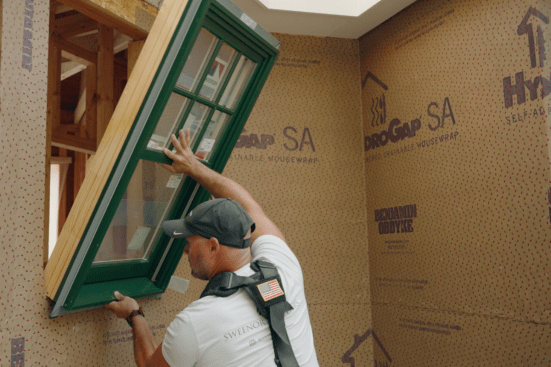
The Andersen Advantage As these pros point out, even the best products will fail without proper detailing. That’s why manufacturers like Andersen provide extensive installation resources—from flashing and sill solutions to training videos and guides—designed to help builders sidestep these pitfalls. Pairing proven practices with engineered products gives contractors a higher degree of confidence in every install, and helps ensure fewer callbacks. Learn more.