
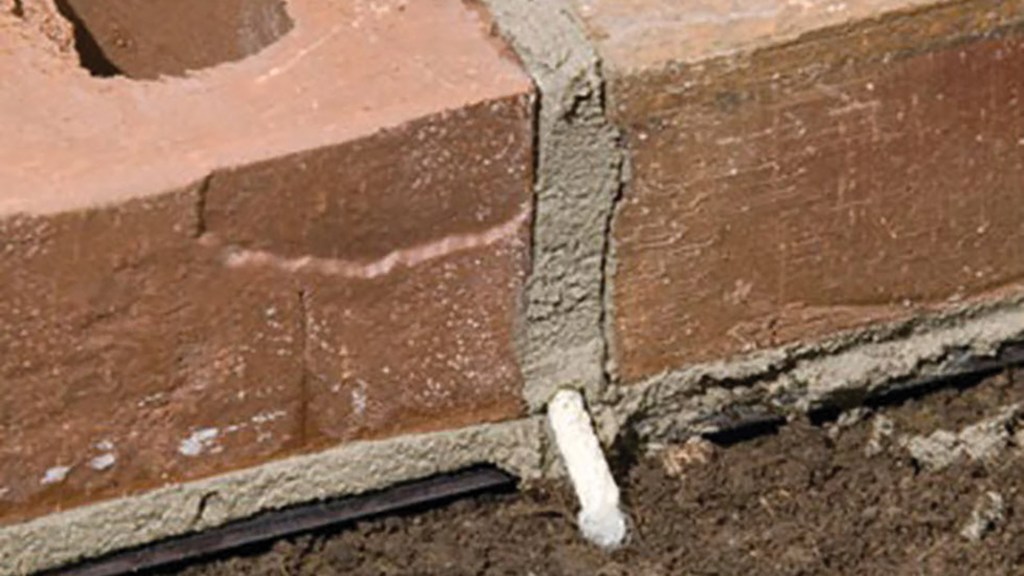
Q. My mason has always used rope for weeps in brick veneer, both at the base of a wall and above an opening where there is through-wall flashing. I heard that the rope can rot over time and then block the holes. Is this true, and is there a better alternative?
A. JLC reached out to a couple of contributors for their thoughts on rope weeps. This is what they had to say:
John Carroll, author of Working Alone, responds: Using a rope wick is an old technique, with some advantages. With it nailed vertically up the frame and run to an open head joint (the vertical space between the bricks at the bottom), it will continue to wick water out even if the mason drops some mortar down the wall cavity. The rope also does not provide the open door for insects to enter behind the brick that open head joints do. I’ve never heard of a problem caused by the rope clogging up as it decayed. While rope wicks are better than open head joints, I prefer using plastic weep vents. These are corrugated—which helps to keep bugs out and allows moisture to move from the cavity—and they are easy to install.
Doug Horgan, vice president of best practices at BOWA, responds: The Brick Industry Association (BIA) states that rope weeps (wicks) are “not preferred” and points out they should be installed closer together than open head joints as they don’t work as well (see references, below). I once saw 2 inches of water dammed up behind rope weeps when I visited a site under construction during a rainstorm. We removed the rope weeps from that project and haven’t used them since. Open head joints are the simplest and cheapest way to go, but we normally use a manufactured weep. Typically, it’s a corrugated or woven material that is a similar color to the brick, so it does not stick out visually in the wall. In another setup we use frequently, we wrap strips of the drain-mesh material we have on site down over the through-wall flashing to leave a small open space right on the flashing that drains well and is inconspicuous.
Jeff Tew
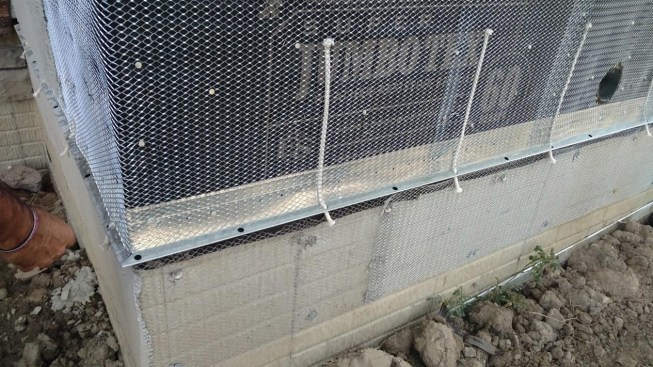
According to Jeff Tew, director of technical and training at Westlake Royal Stone, rope weeps are not recommended for MSV (manufactured stone veneer). On one job he inspected, water would have soaked the ropes, but the flashing and weeps would have then channeled water into the framing instead of away.
For more technical information on rope weeps, download the PDF “Water Penetration Resistance – Design and Detailing,” Technical Notes 7, November 2017, from BIA, at gobrick.com. Also see “Keeping Brick Veneer Walls Dry” by Jerry Carrier, JLC Nov/99, at jlconline.com.
Keep the conversation going—sign up to our newsletter for exclusive content and updates. Sign up for free