Q: If I use an impervious foam sill seal under the mudsills, is treated wood required for the sills?
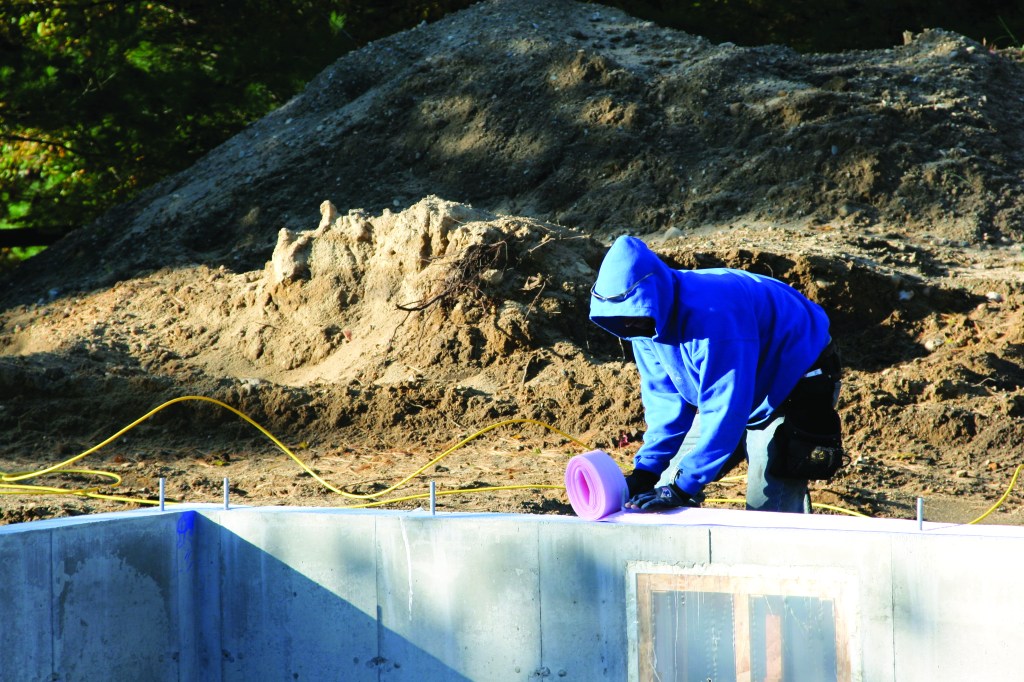
A: Glenn Mathewson, code educator and consultant from Colorado (buildingcodecollege.com), responds: Sill seal is intended to air-seal the joint between the foundation and the mudsills, but it also provides a capillary break between the concrete and the framing. That might seem to suggest that it’s OK to use untreated lumber for the mudsills, saving a little money and eliminating from the jobsite lumber stack yet another specialty product that is used for one purpose. But let’s look at what the code says.
Since the 1920s, building codes have required materials to be decay resistant when used in proximity with the earth or in areas that are subject to moisture retention. I like to think of these areas as being subject to delayed drying. It’s usually much easier to prevent material from getting wet than it is to dry it out.
But here is where the code gets tricky. In Section R317 (Protection of Wood and Wood-based Products Against Decay) of the 2015 and 2018 IRC, the list of seven conditions in R317.1 where code requires treated material can be confusing. For example, item 3, which appears to be closest to our target, says that “sills and sleepers on a concrete slab in contact with the ground must be treated.” However, in the 2006 edition of the IRC, an exception was added when there is an “impervious moisture barrier” between the sills and the slab. But this code item refers specifically to a concrete “slab,” while our case talks about a foundation wall.
Item 2 in R317.1 requires treated lumber for “framing members that rest on concrete exterior foundation walls and that are less than 8 inches from exposed ground.” This item doesn’t refer to a “sill” directly, but it does refer to an exterior foundation wall. Impervious moisture barriers are not included in this item, but using treated lumber seems to hinge on its distance above exposed ground. To me, this means that the moisture or drying issue is not due to the lumber being in contact with concrete—which a barrier could correct—but rather the issue is due to the proximity of the lumber to the exposed (and moist) earth.
Complicating the discussion, item 5 refers to “wall framing on the exterior of a building having a clearance of less than 6 inches from the ground.” What? Now the critical distance is 6 inches, not 8? But is a mudsill “wall framing?” It certainly would be for walls framed directly on top of the foundation, but what if the mudsills are below the floor framing and thereby separated from any wall framing? Should that even matter? (I told you this gets tricky.)
So this might be one of those times when I suggest to just give up and go with treated material or perhaps to invoke my favorite IRC section, R104.11, titled “Alternatives.” This section describes the purpose of the code as setting the benchmark minimum standard, while recognizing and encouraging other means of providing equivalent intent and performance. In the list of seven conditions where decay-resistant lumber is required, three of them specifically mention a protectant material between concrete and wood, which may be a sufficient argument for not using treated material. However, my advice would still be to make the mudsills out of treated lumber. Remember that meeting code means only D-minus or better work. The small added expense of using treated lumber for mudsills is cheap insurance for the longevity of the building.