- Q. Does tongue-and-groove plywood add extra strength or stiffness to a floor system, or does it just help prevent floor squeaks?
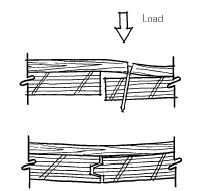
A. The tongue-and-groove joint doesn’t add strength, but it does help to distribute loads to adjacent panels, improving the perceived stiffness of the floor. T&G plywood was developed as a labor-saving alternative to installing solid wood blocking at unsupported panel edges.
Without the tongue and groove, a load on one panel edge causes that panel to deflect relative to the adjacent sheet. A wood floor that spans across the joint would experience a wedging action, causing a floor squeak. Tongue-and-groove plywood is actually more effective than solid blocking at preventing squeaks, because over time the blocking will shrink, leaving unsupported edges.
—S.M.
Q&A: Purpose of T&G Plywood
"Four engineers shed light on common framing mysteries, myths & misconceptions"
1 MIN READ