
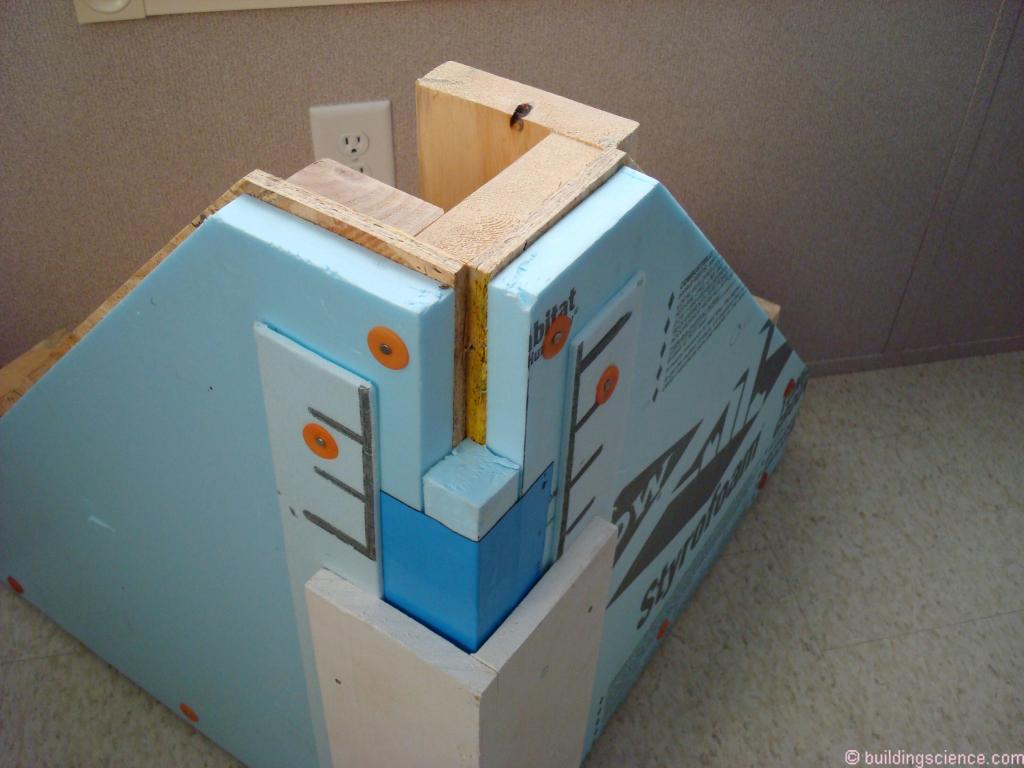
In a recent article on Building Science Insights, Dr. Joe Lstiburek provides must-read guidance on what many of us have called the belt-and-suspenders method of home building. Dr. Joe leans on the engineering term of “multiple system redundancy” – the tried-and true method for building safety-critical systems such as airplanes and nuclear power plants. Homes are simpler but the need for (to boil it down to one word) backup is just as important for keeping water (and mold and rot) out of walls, and keeping conditioned air inside homes. (It all rests on the three-legged stool of building durability, comfort and energy efficiency.)
He starts with “the easy stuff” – air control – and some of it easy to grasp. But some of it is decidedly harder, as when he bumps up against membranes used for air sealing that also act as vapor control layers (read the footnotes; he’s particular about his terms), and we end up with the dreaded “double vapor barrier.
“Relax,” says Dr. Joe, “double vapor barriers work … but with some caveats. In general, avoid them if you can. If you can’t stay away from interior vapor barriers in hot climates and mixed climates and pretty much any place with lots of air conditioning.” It may be hard to relax about this, but there is more from him in “Doubling Down—How Come Double Vapor Barriers Work?“
The water control part is more complicated because, we learn, there is rarely one or even just two water control layers, but many, and for them to be effective they have to drain. How? This is where this article shines. You will get a thorough tour of the requisite terms (i.e. hydrostatic pressure, hygric redistribution) that provide a complete picture of water control with real building materials. But on this you can relax: It’s not a laborious read. As usual with Dr. Joe’ writing (as his speaking), it’s full of opinions that will have you nodding your head, and in the end you will be rewarded with, if not a clear understanding of hygric redistribution, a very clear idea of how big a gap you need to drain (and dry) specific materials … complete with pictures, like the one above, which shows a mock-up for a brilliant, affordable drainage gap for fiber-cement and wood-based sidings installed over continuous insulation.