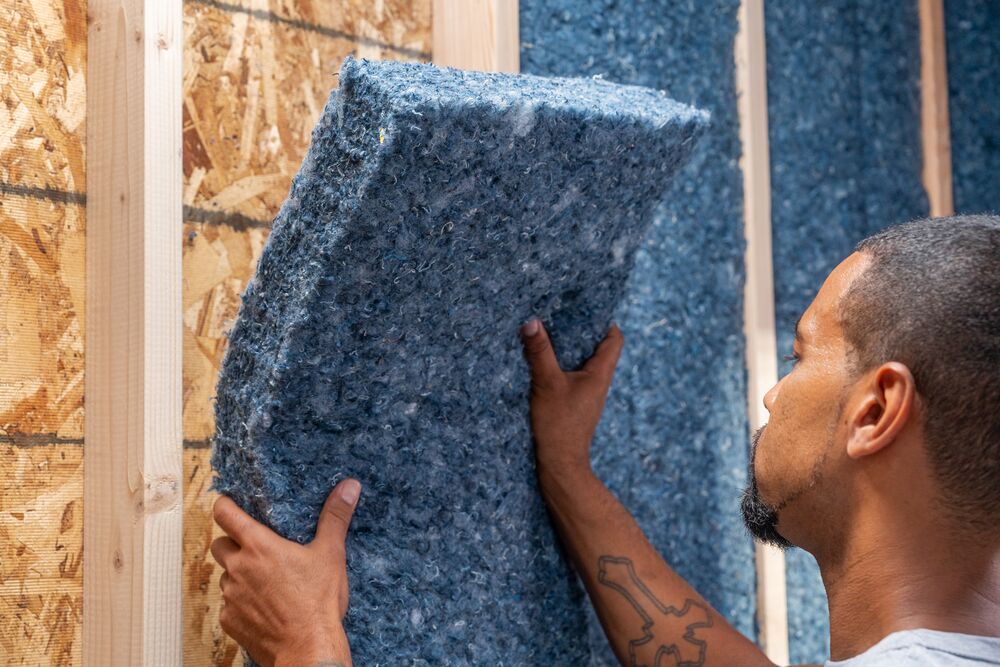
You’re used to working with fiberglass — how could you not be? It’s been around almost a hundred years. It’s typically been a reliably economical and widely available solution. Chances are you’re familiar with the hassle factor too: needing gloves, long sleeves, goggles, and masks or respirators to handle it. Mineral wool is another option you’ve likely worked with, but its higher performance comes at a higher cost, and it has the same handling issues as fiberglass.
The good news? There’s a proven alternative made of a virtually limitless source material. It’s got ecofriendly cred that’ll be appealing for projects trying to achieve Energy Star certification or win LEED points. And best of all, it doesn’t have the skin and lung irritants of fiberglass or mineral wool, so you can ditch the long sleeves and respirator.
We’re talking about recycled denim insulation. Here’s what you need to know about it.
Denim Insulation History and Features
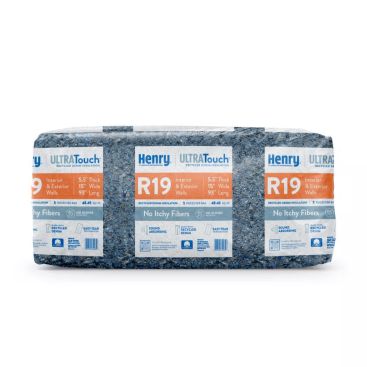
It’s been around a long time. This material has been in existence for decades. The primary brand on the market, UltraTouch Recycled Denim Insulation, was first introduced in 2001, giving it plenty of time to be tested and improved over the years. It’s mainly been sold in home improvement stores.
It’s newly available on a bigger scale. In early 2025, building-envelope specialists Henry, a Carlisle Company, acquired UltraTouch and ramped up production so it’s now a commercially viable insulation option. It’s made from recycled jeans, which otherwise go to landfills in the millions of tons per year, so there’s no shortage of raw material for denim insulation.
It performs better than fiberglass and matches mineral wool. Denim insulation’s thermal performance and fire, mold, mildew, and pest resistance stack up to other insulation types. Plus, UltraTouch is denser than fiberglass and blocks out noise better than or equal to any other insulation in tests, including mineral wool. “We recently heard from some contractors installing it between floors in a remodel with existing shiplap flooring, and they were impressed by the acoustic performance,” says Ian O’Connor, Product Manager at Carlisle. “With a remodel especially, homeowners are going to notice the improved sound control.”
It’s a middle-market option. While it’s comparable to mineral wool in performance, budgetwise it tends to fall in between fiberglass and mineral wool, so it could be a way to get higher acoustic performance more cost-effectively.
It’s way less harmful to humans. The most significant improvement for workers actually handling the material is its respiratory safeness and lack of irritants. Made up of 80% recycled cotton denim and 20% textile binder, the insulation is soft and won’t cause itching or respiratory problems if handled without PPE.
It’s better for the environment too. Denim insulation can keep massive amounts of textiles — one of the biggest categories of solid waste — out of landfills. Unlike materials like recycled glass or slag, which have lots of manufacturing uses, recycled denim has fewer recovery options, so that’s a big deal. UltraTouch partners with Cotton’s Blue Jeans Go Green™ denim recycling program, which helps coordinate “take-back” programs with retail chains.
Fiberglass and mineral wool do contain recycled material, but their carbon load is higher because it takes a lot of energy to melt glass, rock, or slag. Recycled denim insulation is much less carbon-intensive to produce, so it has a smaller footprint.
Denim Insulation Qualities and Handling Tips
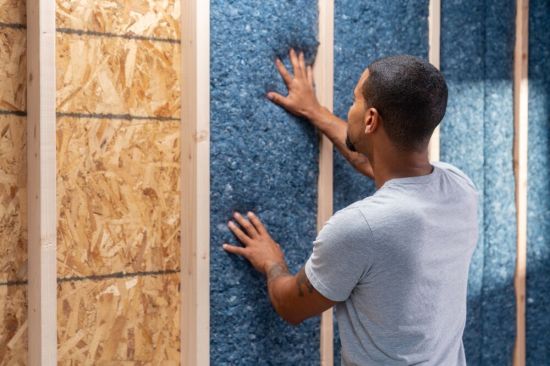
No PPE is required. As mentioned, the big difference in using denim insulation vs. fiberglass or mineral wool is that you won’t need to put on goggles or gloves or tight-fitting respirators to handle this material. A simple dust mask is recommended to block cotton dust or loose fibers (and any other construction-related airborne contaminants).
It’s lightweight and flexible. Denim insulation is more akin to fiberglass than mineral wool in this department. While mineral wool is heavier and more brittle — if you cut it wrong or it fractures while you’re handling it, you must start over with a new piece — denim is soft and more flexible, making it easy to manipulate and fit anywhere it’s needed.
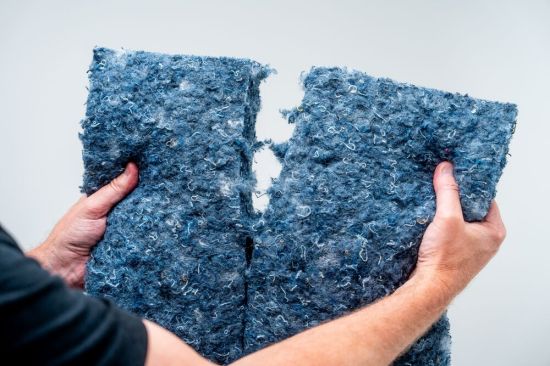
You’ll just need a batt knife. UltraTouch has a midline perforation in the roll, which makes it easier to fit to smaller cavities without cutting. When you need to cut it to your exact needs, the best tool for cutting thick cotton layers is a batt knife. Contractors report that it’s easy to cut with the right tool.
A single source for insulation needs
UltraTouch is just one of the insulation products offered by Henry. They also carry spray foam for attics and air barriers for exterior sheathing. “Being able to source all your insulation needs from a single supplier simplifies everything,” says Julie Eno, VP of Customer Insights at Carlisle. “We’ll help you get the job done easier while meeting performance and sustainability goals, and you’ve got one team to support you with specifications, procurement, installation, and the warranty.”
Learn more about UltraTouch and see the full line of Henry integrated systems for building envelopes.
Research Sources:
Why Builders Choose Denim Insulation Over Fiberglass
Textiles: Material-Specific Data
Insulation makers tally recycled glass consumption
Recycled Content Use Tops 3 Billion Pounds
The History of Fiberglass Insulation
Fiberglass Insulation: History, Hazards and Alternatives
Denim Insulation Review: Comparison Guide and Pros and Cons
Why Builders Choose Denim Insulation Over Fiberglass
Which Is Better For Absorbing Sound: Cellulose Or Denim?
Denim Insulation: Blue to Green
Recycled Denim: Turning Old Jeans Into Sustainable Home Insulation