The first time I watched a carpenter scribe a countertop to the inside corner of an irregular plaster wall, I was impressed. With practice, I eventually got pretty good at scribing. But the more things I built, the more jobs I encountered where standard scribing techniques didn’t work — situations like inside treads on winding stairways and countertops in three-sided alcoves with no backsplash (as with built-in desks). In cases like these, many carpenters make either a wooden frame or a plywood template in the exact size and shape of the finished piece. I’m not a big fan of these methods, both of which are time-consuming. A wooden frame is flimsy,
Scribing Panels and Countertops
"When there’s no room for error, these two techniques will give you a tight fit every time"
1 MIN READ
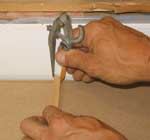
Photo: David Sharpe
A piece of wood the width of the scribe on the adjacent wall jogs the divider pencil so the countertop will match the uneven walls on an inside corner countertop.