
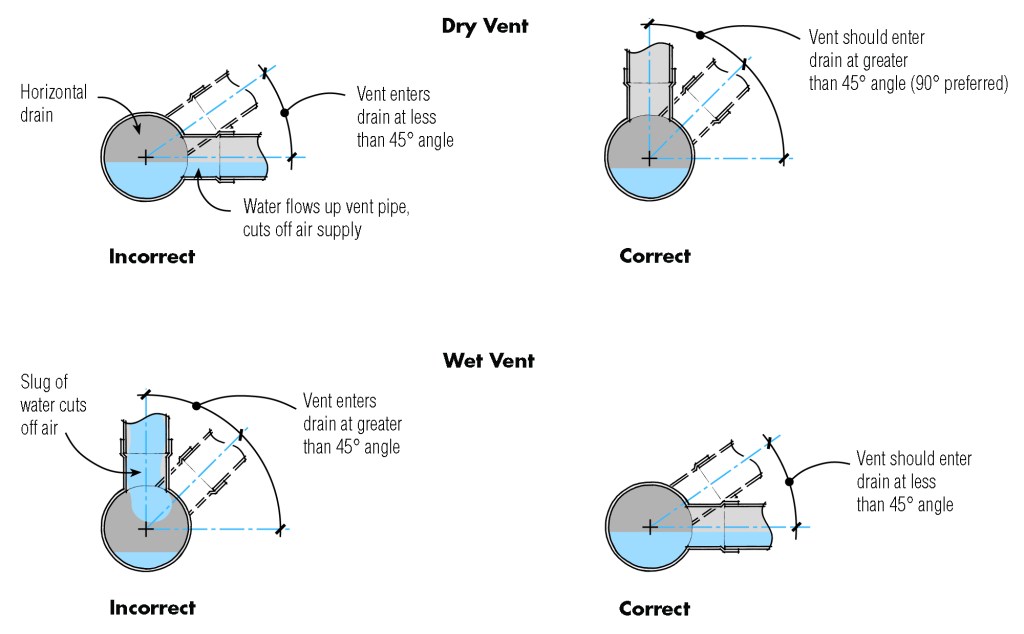
There are two basic ways to supply air to a drain line: through a dry vent or through a wet vent (if codes allow). A dry vent supplies only air to the drain line, whereas a wet vent functions as both a drain line and a vent.
Wet Vent Rules
- A wet vent can handle all the fixtures in two bathroom groups (a bathroom group is a lav, toilet, bidet, and tub or shower).
- To stay out of trouble with wet vents, go beyond code and use a 4-in. main horizontal waste line where possible.
- Any wet vents must be 2 in. minimum in diameter.
Wet Vent to Main Drain
Plumbing codes are very specific about the angle at which a wet or dry vent may enter a horizontal drain line. Make sure you have enough room for wet vents to enter drain lines so that your drain configuration will function as a true vent (see illustration below).
For more on plumbing vents, including wet vent configurations and dry vent rules, visit the JLC Field Guide.