
Ice Dam Solutions

1 MIN READ
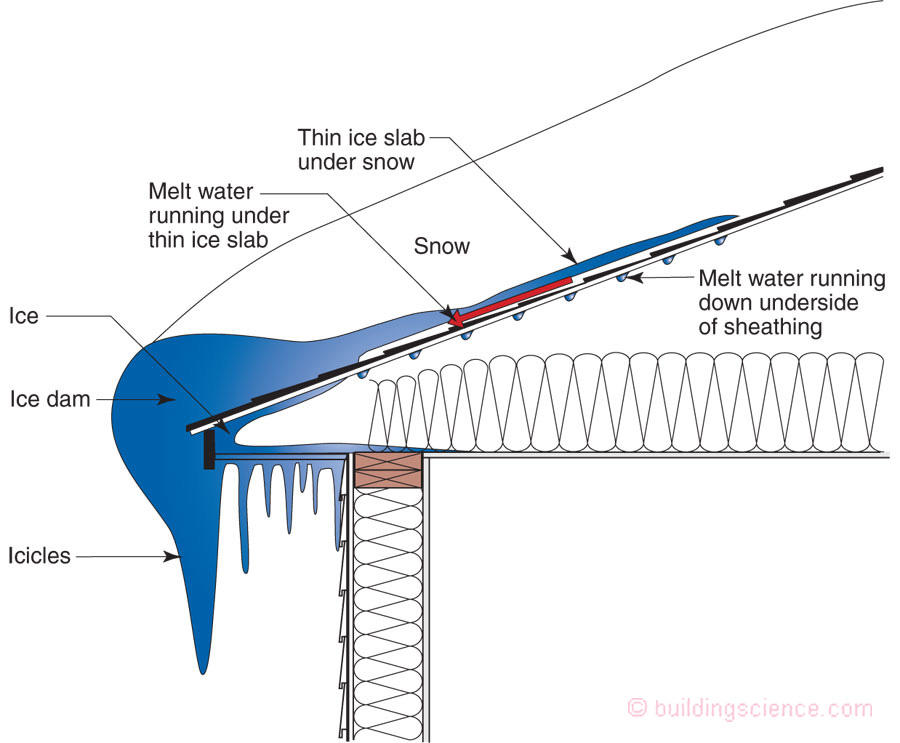
When the snow layer adjacent the roof deck melts the liquid water is wicked upward into the snow pack by capillarity away from the roof covering. As the liquid water migrates upwards it gets colder and freezes. As more snow melts and the liquid water phase exceeds the storage capacity of the snow it runs downward under the ice layer via gravity. At the roof edge and roof overhang the deck is much colder and the drainage gap freezes solid causing the water to back up. It gets ugly pretty quickly.
BSC

When the snow layer adjacent the roof deck melts the liquid water is wicked upward into the snow pack by capillarity away from the roof covering. As the liquid water migrates upwards it gets colder and freezes. As more snow melts and the liquid water phase exceeds the storage capacity of the snow it runs downward under the ice layer via gravity. At the roof edge and roof overhang the deck is much colder and the drainage gap freezes solid causing the water to back up. It gets ugly pretty quickly.

Presenting it as only he can – with clear, unwavering statements and plenty of dry wit – Dr. Joe gives us a practical guide to solving ice dams in existing buildings:

The physics of ice dams is well understood. Ice dams happen when the outside temperature is below freezing, the roof deck temperature is above freezing and there is snow on the roof. The warm roof deck causes the snow on top of the roof deck to melt and the melt water runs down to the edge of the roof where the water freezes leading to a buildup of ice and a back-up of water – hence the term “dam.”


The key to preventing ice dams is either to keep heat from the house from getting to the underside of the roof deck or to get rid of the heat once it gets there. The first approach is pretty straightforward … air tightness, air tightness, air tightness … Yes, you read that correctly. Not so much insulation. Okay, we want insulation as well … but airtightness most of all.

Read more.

No recommended contents to display.