
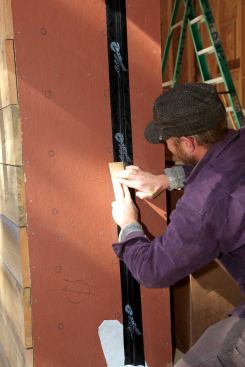
courtesy DuPont
Butyl flashing has a wider temperature range than RA and sticks …
Windows. RA flashings shouldn’t be installed over flexible vinyl because the plasticizers in the vinyl can cause the asphalt to flow and make the flashing lose adhesion. In some cases, a reaction with the flashing can make the vinyl brittle. This doesn’t seem to be an issue with rigid PVC window flanges, but window manufacturers detail compatibility issues in their installation instructions or on their websites, so it’s a good idea to make sure you’re using the proper flashing for the windows you’re installing. Two examples are Ply Gem, which uses rigid vinyl fins, and Marvin, which uses flexible vinyl fins on its fiberglass windows. Mark Waddell, an installation and applications specialist with Ply Gem, has no problem with high-quality RA flashing. Marvin, on the other hand advises against using any asphalt-based adhesives with its products. “We say that any tape used with our windows must not contain asphalt,” says Eric Klein, an installation trainer with Marvin Windows and Doors. The company recommends butyl, which is compatible with nearly all substrates.
WRB issues. The other part of compatibility is how the flashing tape will interact with the rest of the weatherization system. “In my opinion you can’t address compatibility without considering the weather resistant barrier [WRB], as well as any caulks and sealants that will be used,” Robinson says.
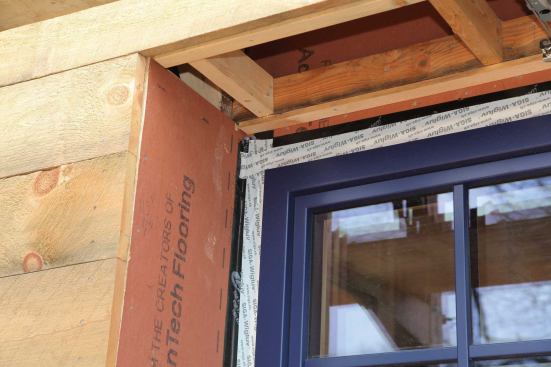
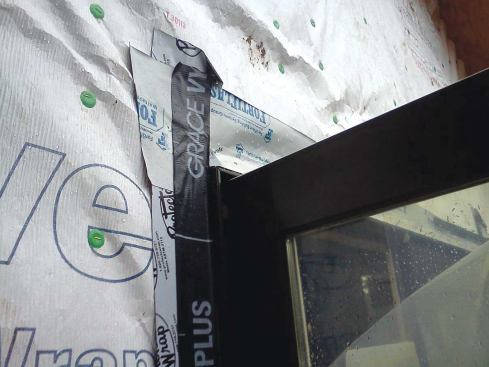
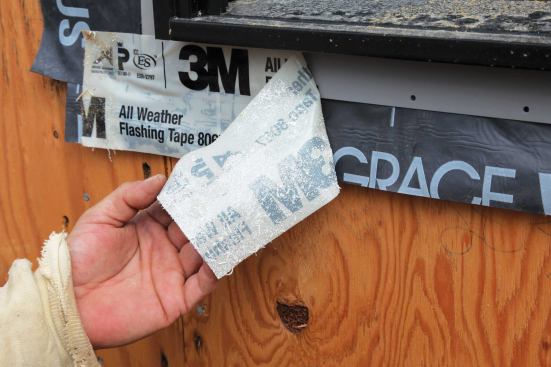
Although some installers buy a mismatch of products based on what local suppliers carry, most WRB manufacturers will honor their warranty only if their product is installed with the recommended flashing, usually one made by the same manufacturer. The WRB and tape are formulated for maximum adhesion and to eliminate compatibility problems. “The easiest way to sort it out is to go with a company that provides a line of products that are its own,” Robinson says. “DuPont, Fortifiber, and Protecto Wrap are three examples, but there are several others.”
Of course, some products aren’t sold as part of a system. “I’ve seen manufacturers come out with a new WRB but not recommend a compatible tape,” Robinson says. In these cases it’s up to the builder to decide if it’s worth the potential liability.
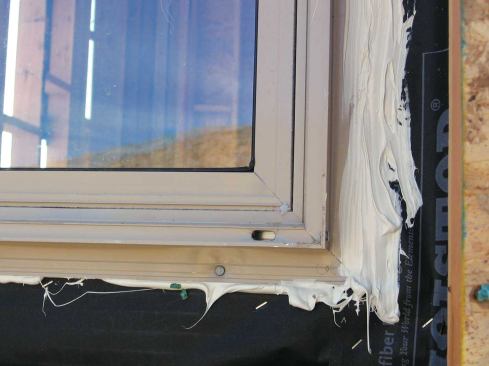
Sealant compatibility. Where sealants must be used, such as around windows and doors, flashing manufacturers may also specify which sealants are acceptable. For instance, some asphalt-based flashings can react with the solvents in some caulks and sealants in a way that compromises the seal, so it’s important to follow the recommendations of the flashing tape manufacturer.
The high surface tension of silicone caulk makes it a bad choice to use with even the best flashing tape. “The silicone surface is just too slick,” says Floris Keverling Buisman of 475 High Performance Building Supply, which is the U.S. importer and distributor of German-based ProClima flashings. Klein, from Marvin Windows, has come to a similar conclusion based on his own field-testing. “I did a test using a silicone sealant with an asphalt-based flashing and a flexible vinyl window flange,” he says. “It failed in a very short time.”
The bottom line? “Builders need to do their homework before deciding which products to use,” says Ply Gem’s Waddell. “If you want to stay out of trouble, you need to look at the type of window, the housewrap, and the sealant as a system.”
Moisture Issues
Most tapes are impermeable, so they can form a wrong-side vapor barrier on the outside of the structure, causing vapor to condense behind them and eventually damage the material underneath. And if there’s a leak, an impermeable tape could, under certain circumstances, force the building to dry inward, something that can be difficult to do in winter.
It’s not common but it can happen, especially in cold climates. Some installers will put wide flashings beneath the siding where there’s a concern about splash-back, such as at inside corners. But doing so increases the chance of problems if there is excess moisture migrating out from inside the house. One option is to use a vapor-permeable tape such as ProClima’s Tescon, which has a perm value of 8—roughly the equivalent of latex paint. Siga’s WiGluv acrylic tape is vapor-permeable but is impermeable to water. When used around windows and doors, it keeps the weather out but allows moisture from inside the house to readily escape.
Installing it Right
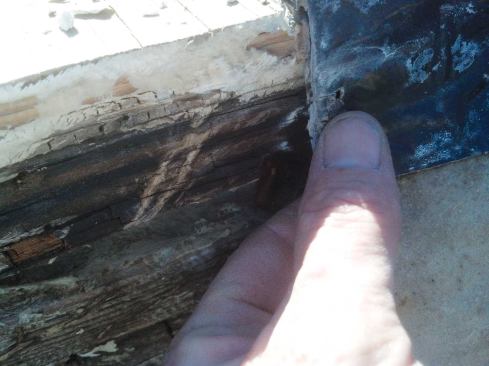
When it comes to installation, every little detail counts. Bill Leys of Central Coast Waterproofing, in San Luis Obispo, Calif., discovered this after a homeowner who had just bought an 11-year-old home for $1.4 million called him about a leak. The inspector hadn’t found any major issues, but when Leys’ crew looked further they found $110,000 worth of water damage. Water had run down through the structure from the roof to the foundation, causing extensive rot. The culprit: a stucco-clad parapet wall on the roof deck that had been waterproofed with rubberized asphalt flashing. The contractor had stapled stucco paper through the flashing and, over time, water had seeped through the staple holes, even though the flashing was supposed to be self-healing.
“A lot of guys don’t really understand how the smallest details can cause the biggest problems,” Leys says. “They do 90% of the job right but screw up on the small details that will cause problems a few years down the road.”
Bill Rose points out that these small details were much less problematic in older structures with drafty assemblies that dried out more quickly, but that today’s building assemblies are less tolerant of error. “People may have gotten away with poor geometry in the past when the building was overheated and poorly insulated,” he says, “but that’s not the case anymore.”
The most common mistakes—the places where installers need to pay special attention—are improper sequencing of flashings, improper cuts, poor surface prep, and not properly seating the flashing on the substrate. Such problems are most likely where builders assign flashing work to the least-experienced crew members or to subs. For instance, plumbers, electricians, and HVAC contractors are sometimes responsible for flashing the holes they make in the building envelope, but few do it correctly.
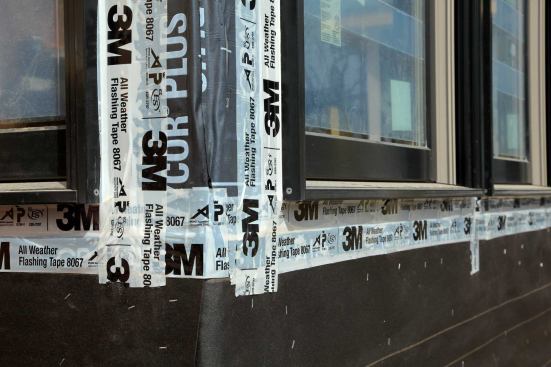
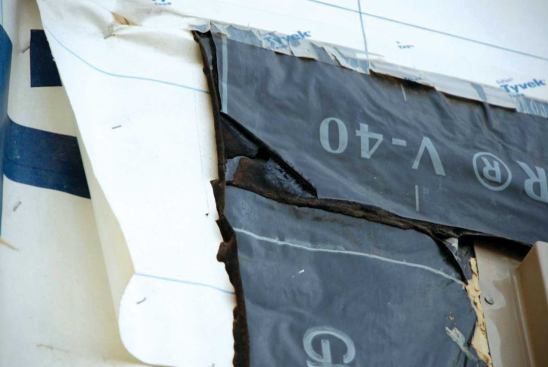
Improper sequencing. Everyone we spoke with named improper sequencing, or reversing the layers of flashing, as the most common mistake seen in the field. That came as a bit of a shock: You would be hard-pressed to see anyone installing lap siding upside down because they understand that, absent very high winds, water flows downhill. But it seems that understanding sometimes evaporates when it comes to flashing. “I see a lot of gravity-defying flashing details where the upper layers go under the lower layers,” says Paul Eldrenkamp, a Newton, Mass., design/builder and frequent lecturer on moisture-related issues.
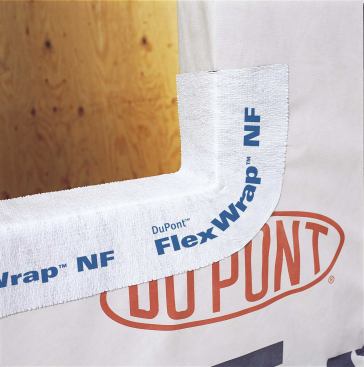
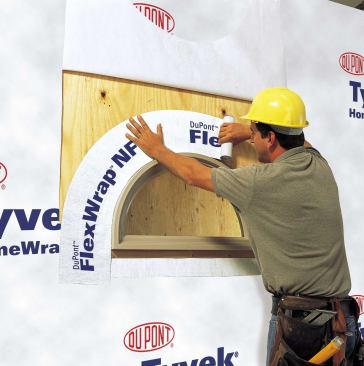
One common problem area is the curved-top window. It’s not unusual to see an installer piece in flashing on one side and work to the other, instead of working from both sides and meeting at the top. Half-circle windows are a great place to use flexible accordion-style flashing, which will follow the curve of the window from one side to the other without interruption. The trick then is to get the WRB properly installed over the flashing.
Most likely, installers rely on the adhesive to provide waterproofing. Bad idea. Flashing details should provide 100% mechanical drainage paths so that they shed water even if the adhesive fails. High-tech materials are no substitute for good installation details.
To be fair, improper sequencing isn’t always obvious with flexible flashings. For instance someone might follow the correct sequence and flash the sides of a window before flashing the head, but allow the side flashing to extend up past the head flashing.
A good antidote to improper sequencing is a simple shift in mindset. Carl Hagstrom, a Montrose, Pa., contractor who does a lot of writing and training on proper flashing techniques, points out that people are far more careful when they’re flashing roof penetrations. “I tell people to stop thinking of a window or door in a wall and instead think of it as a skylight. When I say that, the light bulbs go off. They pay a lot more attention.”
Improper surface preparation. Regardless of tape choice, installers must pay attention to surface conditions. “It should go without saying that the substrate needs to be clean and dry, but it seems that not everyone gets this,” writes Joe Lstiburek of Building Science Corp. “With tapes, the biggest single problem is folks thinking they can stick them to muddy, dirty, cold, wet, and frozen surfaces. You would think this is obvious. Amazing as it seems, folks keep trying to do it.”
As mentioned, there can be adhesion problems with the rough side of OSB—even if it’s bone-dry and clean—as well as with gypsum and masonry-based substrates. The best solution is to apply a primer, which will fill in any irregularities in the substrate and will provide extra adhesion. Flashing manufacturers have primers designed to work with their flashings.
Poorly placed fasteners. Just as it’s foolish to rely on adhesion for waterproofing, the self-sealing properties of peel-and-stick flashings shouldn’t be considered primary protection, as Leys’ client found out the hard way. Fasteners should not be driven through the flashing in areas where water could collect, as in a windowsill.
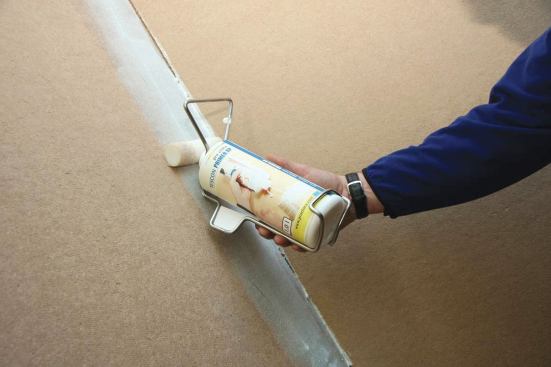
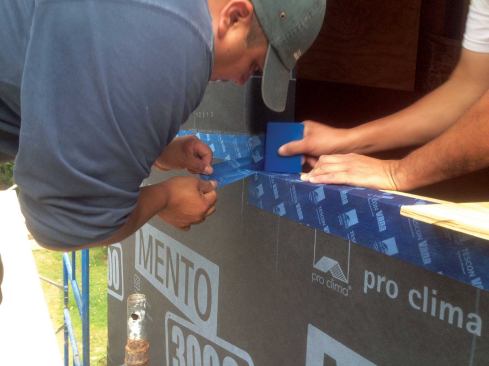
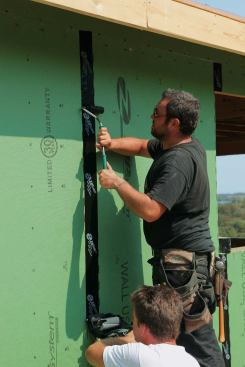
Not rolling. Some installers give too much credit to flashing’s adhesive abilities and simply lay it on the surface and press it on by hand instead of going over it with a roller. But the truth is that all flashing needs to be rolled in order to properly adhere. “This is a big problem,” Robinson says. “You can’t just use your hand to smooth it on. I use a J-roller to mash it onto the substrate.” He suggests using a rubberized roller, as the metal ones can puncture or rip the membrane. And if you need to ensure adhesion in an inside corner, the square butt edge of a shingle can take the place of a roller.