In 2018, I presented some JLC Live–style demos at The International Builders’ Show. The demos were supported by Ridgid Power Tools. And, like every other exhibitor there, the good folks at Ridgid filled out their bills of lading and trusted a couple of pallets of table saws, miter saws, cordless tools, and nailers to the process that takes several acres of empty room and turns it into a neat grid and miles of carpeted aisles bordering hundreds of exhibitor booths and displays.
Unlike most of the other items—everything from faucets to siding to 3/4-ton pickups—being whizzed through the doors from a line of 18-wheelers at the freight dock, our tools got lost. That’s when I met the guy who coordinates it all. As day turned into night, we were running out of options and we needed those tools.
Around 9:30 that night, he found them—in the back of a semi-rig. And even though the stress of our now torpedoed prebuild schedule was brutal, my takeaway from it is one line he said I’ll never forget: “10 million pounds of freight comes through these doors.”
Well, if IBS is 10 million pounds, World of Concrete is 25 million. I didn’t weigh it myself, but it’s big. And the tool companies want to be there. Hilti and Bosch build small cities (Bosch’s had a tattoo parlor … not kidding) with a fleet of Dodge trucks skirting their impact drivers and, well, a tattoo parlor. Hilti broke up Stonehenge-big concrete slabs with its hammers for three days and knocked over laser levels time and time again. What DeWalt and Makita lacked in urban planning, they made up for with a party-style atmosphere and booths crammed with tools and people.
And while the big guys made their big splashes, there were some smaller players there too, with some smaller items that elicited an immediate reaction of “that’ll work.”
So despite the feeding frenzy of pumper trucks, heavy-lift telehandlers, and four-story “booths” as far as the eye could see, here are six small things that fight above their weight.
Improved Dirt Chisel
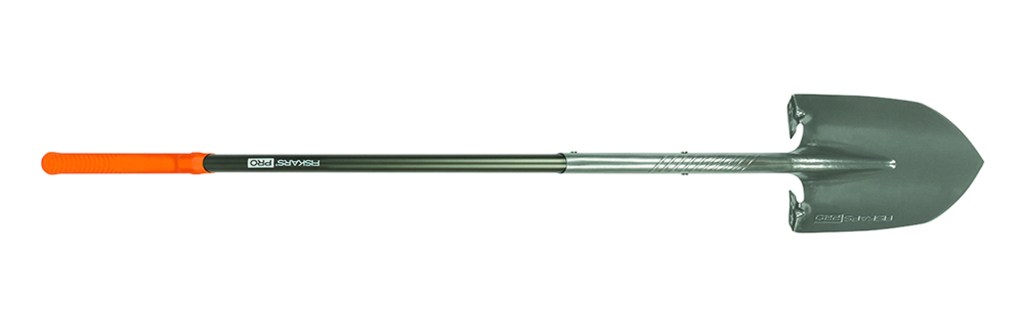
I associate Fiskars with home, garden, and crafting stuff. But a recent spate of entries into the pro line-up has found a home in my truck. Namely, a great shovel that, apparently, the manufacturer improved since last year. The one I have is all steel. I thought it couldn’t be improved, but I stand corrected. If you want a shovel that will last forever, take a look.
The Fiskars Pro Digging Shovel features ultimate durability, making it ideal for digging and prying in tough soil. An extruded aluminum handle ensures superior strength, while double-bolted connections guarantee the tool will not come apart. The heavy-gauge spade has a sharpened edge that makes it easier to dig and chop roots. A large step provides more stable footing—this is a great feature—while the shaft angle is optimized for digging and prying. The shaft is also teardrop-shaped to better fit the contours of your hand. Additionally, Softgrip touchpoints on a high-visibility handle enhance comfort and control, as well as reduce repetitive fatigue. The simple, heavy-duty construction of this shovel makes it a reliable choice for daily, quality performance under all conditions. Full lifetime warranty. Cost: $60. fiskars.com
Caulk, Spray Foam, and Tape Warmer
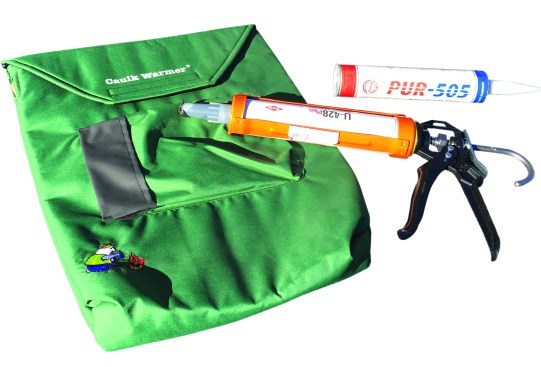
Among Arctic Warmers’ suite of heated bags, wraps, hose wraps, and bucket warmers, its Caulk Warmer Bag seems to be the most versatile. It’s a general-use satchel that can hold 12 standard caulk tubes, seven quart-size caulk tubes, 12 grease cartridges, eight cans of foam, and twelve rolls of sealing tape. Who said you can’t properly flash windows in the winter? The company says the satchel maintains an even 80°F, even at outdoor temps of -13°F. The wraps feature a nylon outer material with a closed cell insulator and a vinyl interior, and come with a cord pocket and carry handle. The company also has a 5-Gallon Pail Warming Heater Wrap, which is designed to keep paint viscous enough to flow freely on freezing sites (or in the van overnight using shore power). Cost: Caulk Warmer Bag, $106; Pail Wrap, $108. arcticwarmers.com
Jobsite Illumination
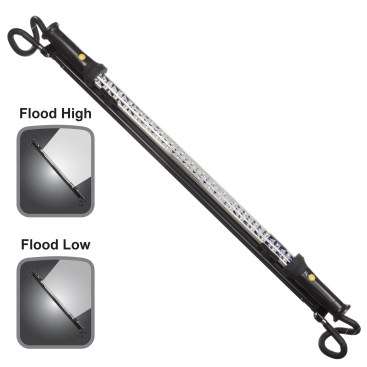
Technically a corded/cordless “Emergency Area Light/Under Hood Work Light,” Nightstick’s SLR-2120 seems like a fully-featured worklight that could solve loads of jobsite and truck lighting problems. Run via on-board battery or plugged into the wall via its charger, the body rotates 360 degrees. The 2120 has two settings: Full power is 1,200 lumens; half power, 650 lumens. It has on/off buttons on either end. The flat surface at the end of the Nightstick enables you to stand it upright—a useful feature for cramped jobs—and a hook enables you to hang it from a screw. Three flush-mounted magnets are located at the end of each pivoting handle. This, Nightstick says, allows one or both ends of the light bar to be attached to virtually any magnetic surface. It requires six hours to charge fully and will run for 4 1/2-hours in full and 8 1/2 hours in half modes. Finally, the hood-mounting hooks extend from 48 to 70 inches. I see no reason why they wouldn’t hang on, say, ceiling joists in an open frame. Maybe lay the hooks over blocks to simulate them wrapping around a car hood. Or, just wrap them around your car hood. Cost: $114. baycoproducts.com
A Lighter Loader
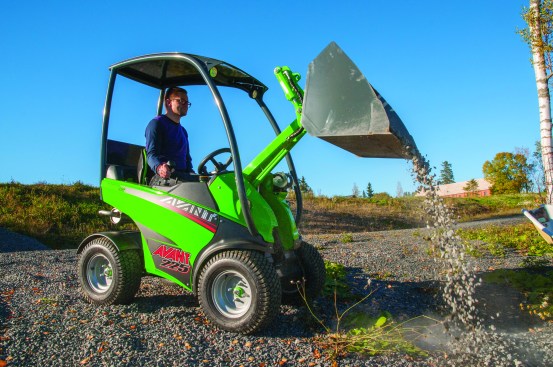
The secret in the Avant loader sauce is the articulating body, says the company. And, five seconds watching one wend its way through a course of cones leaves little doubt the claim delivers.
The 200 series hits that subcompact-loader sweet spot—and you don’t have to stand up or walk to operate it. It’s not fair to call it a tractor or ATV-style unit, though it looks similar in stature—it’s better. It’s small and mobile and its PTO can drive 100 attachments, including a snow plow and lawn mower.
Avant say the design enables it to make lighter machines that perform better, with lower ground impact, because the loaders make sweeping turns instead of skids. And the body style enables it to deploy a telescoping boom from the front arm, ideal for anything from loading lumber to dumping dirt over the side of a taller dump truck or trailer.
The company claims this format uses less fuel and far fewer tires and is overall a superior design for the light loader. It is 100% worth checking into if you’re bringing iron into your shop. Check with a dealer for pricing. avanttecno.com
Best Caulk Gun Ever?
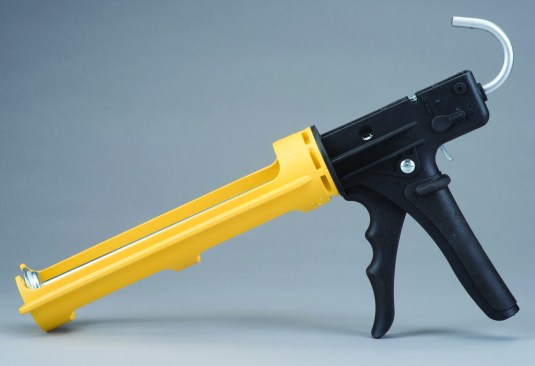
It doesn’t seem like it’d be that hard to make a decent caulk gun. Yet, finding one seems to be something of a challenge. Almost anything for sale in a big box store is lacking some combination of spout cutter, puncture rod, or the ability to actually release pressure from the tube … except for these new ones from Dripless, which are available in some Home Depots. At the demo area, the gun fully released pressure on the tube. I’ll say that again: Fully. No secret trail of goop slithered out after the button was depressed. The spout cutter not only exists, but it’s sharp. The frame is made from what looks to be a tough composite. And it has a puncture rod. Dripless says the ETS2000 models are best for paint applications because they cost less. If you’re squeezing urethane on a cold day to adhere sheathing, Dripless says the ETS3000 is a better bet. Cost: ETS2000, $12.50; ETS3000, $16. dripless.com
Like Music To Your Ears
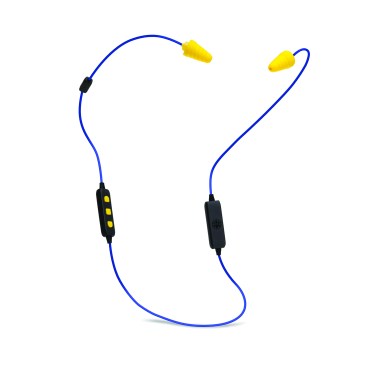
On a show floor that spilled out into three separate parking lots packed with hundreds of items easily costing $250,000 or more, finding Plugfones, a $25 item, was a coup. There are three models of Plugfone: Bluetooth Liberate 2.0 (shown), Guardian Plus (plug into your phone jack), and Guardian. Basically safety-style ear plugs for your ears on a cord, the Guardian is a listen-only model. The Guardian Plus has a microphone. And the Liberate 2.0 is a fully featured wireless headset with a microphone. You can get replacement plugs in foam or silicone. The Liberate looks really dialed in: noise-canceling tech for incoming sound and mic, a long-lasting battery, quick charge, and control of your device from the Plugfone. Cost: Liberate 2.0, $100; Guardian Plus, $35; Guardian, $25. plugfones.com