
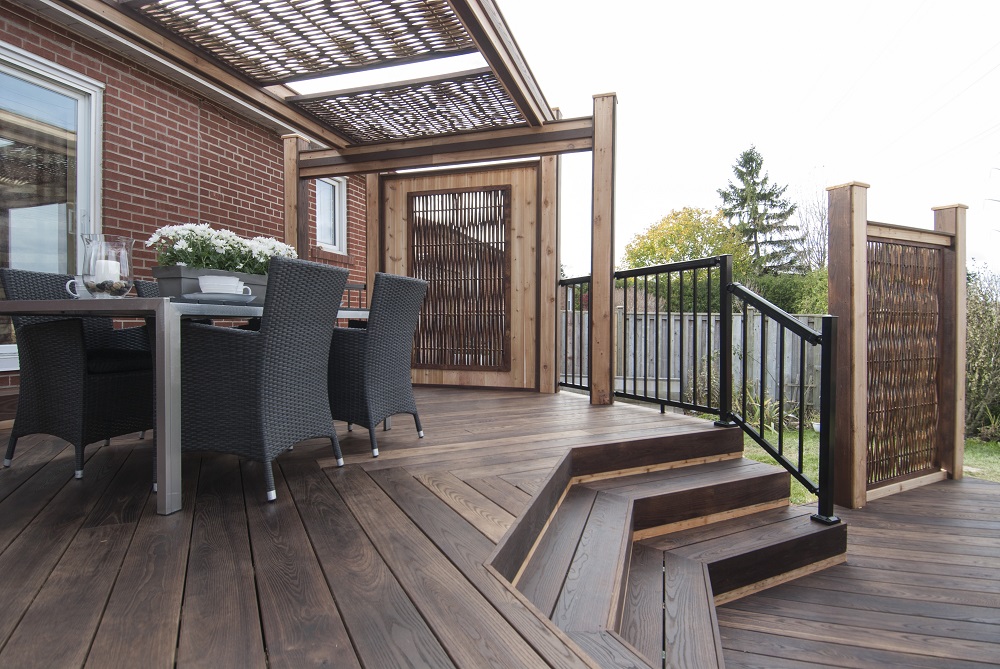
Last November, PDB posted an invitation to participate in an online survey of professional users of decking products. The survey was part of a University of Minnesota research study on wood decking preferences in general, and on user perceptions of thermally modified wood decking in particular. According to Shelby Gamache, one of the co-authors of the study, the goal was to try to identify why the U.S. lags far behind Europe when it comes to the use of thermally modified wood products. Deck Expo attendees and PDB readers were chosen to participate in the study because of their influence on the decking material decisions of their clients.
Not surprisingly, one of the study’s findings is that there is widespread unfamiliarity with thermally modified wood, and mixed perceptions about its performance about it as a decking material. That’s a shame, because thermally modified wood decking is a great alternative to ipe and other types of tropical hardwoods. And as a bonus, as Gamache notes in the introduction to her report, the production process has the potential to create and expand the market for locally-sourced forest products, particularly for traditionally underutilized and low-value species such as ash. You can read a summary of the report, which was published by the Forest Products Management Development Institute at the University of Minnesota, by clicking here.
