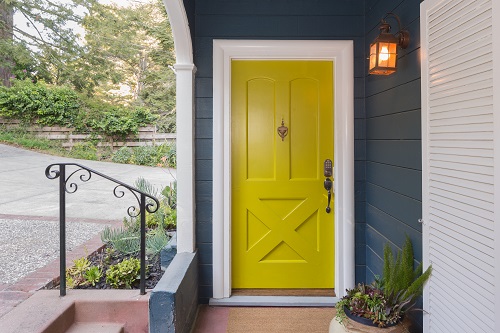
Back in the 1980s, Bob Bollin discovered a hard truth about one aspect of exterior remodeling that still plagues many contractors today and confounds manufactures: it’s not only hard to sell entry doors, it’s also hard to install them.
“We failed miserably,” said Bollin, president of TOLEDO DOOR AND WINDOW. “With entry doors, it’s very critical that the finished product looks like it was built to be part of the house, and there’s a lot of contractors out there who can’t handle that.”
That’s because unlike windows, doors are much less forgiving and therefore much more time consuming to install. There’s also a lot more moving parts with door installs —trim work, shoe work, hinges, frames — so there’s much more that can go wrong. And entry doors, especially grand ones, are a key focal point of the home, so the fit and finish has to be furniture grade.
“With windows you put them in and make them square. They’re just more self-contained,” said John Gorman, president of the Save Energy Company. “There’s a much better chance for service calls than there is for windows. There are more things that can go wrong with a door than a fixed or sliding window.”
To make matters worse, Gorman said in California, where he does door installs, the soil settles a lot, which causes doorframes to go out of plumb. “You can get away with a lot slapping a window in,” he says. “You can’t really slap a door in.”
And when things go wrong with a slapped-in door, customers are the first to notice. “If it’s not done right, that door will never shut correctly and the customer is going to call back and they’re going to write horrible reviews,” warned Milissa Clark, Residential Renovations marketing consultant.
The acute labor shortage only exacerbates the problem. Gorman said even if you have good window installers, it doesn’t mean they’ll be good entry door installers. “Some of the guys who move a billion windows may not be set up to do doors,” he said. “We barely are and we have really good installers.”
The reason window installers don’t automatically make good door installers is because door installs call for carpenters who are more artists than laborers, said Steve Newton, vice president of national products for Window World.
“We’re digging into ways to find more true artisans,” Newton said. “Most of these tech schools really don’t help support those programs the way they used to. There’s no incentive to become an artisan.”
But contractors who can find those artisans stand to make good money, Bollin said. In his busiest season, Bollin’s firm installs 80 to 100 doors a month. And customers are far more willing to spend significant money for doors than they are other installs, he said. “Our customers will [complain] about a $1,000 garage door, but they won’t bat an eye about an $8,000 to $10,000 entry door,” he said. “But people don’t want an entry that looks like it was added on. So it better look perfect when it’s done.”
To meet those high expectations, Bollin relies on two main door installers who have been working for him for 23 years and 12 years respectively. His elder installer trains the younger ones. “The key is to have personnel who can properly install it and trim it out so it looks like it was there when the house was built,” he said.
Ultimately, having that kind of personnel gives contractors the confidence they need to sell higher-end doors, which is where most profits can be found, Newton said. “There are so many variables built into a door. So you have to understand all of that and offer it with confidence,” he said. “One door can be the same amount as an entire window install, especially a grand entry door. But one of the leading problems in making that sale is lack of confidence and fear they’re going to mess up the install.”