
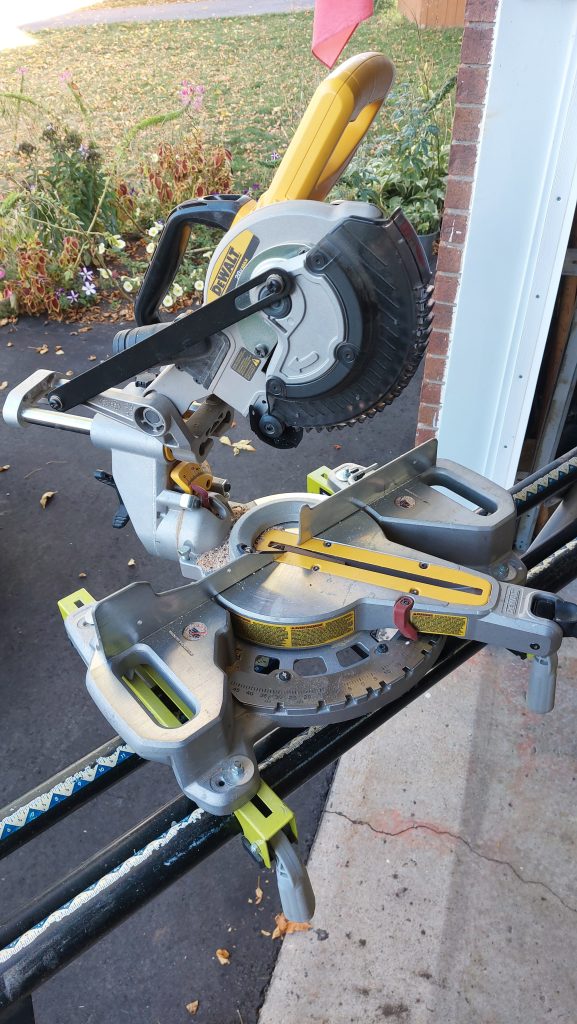
I used to cut a lot of trim. A 12-inch miter saw (and stand) was usually one of the first tools out of the van. However, on many jobs, the size and cutting capacity of the 12-inch beast were overkill. On other, large jobs with my partners, it was clear that a second saw would reduce the time we wasted moving around on site and taking turns to make a cut. My solution was a DeWalt 7 ¼-inch sliding miter saw (DCS361M1).
The saw runs on 20-volt batteries, so I didn’t need an outlet nearby to use it. A 4-amp battery lasted three-quarters of a day—plenty of time to charge a backup. The 7 ¼-inch blades are much less expensive than 12-inch ones, so a new, sharp blade didn’t break the bank. With the saw’s smaller size and weight (31 pounds), I could carry it one-handed and haul it upstairs or onto tight balconies when a larger saw would have been a chore. The built-in light illuminates the cutting area and can be left on when the saw’s not in use.
Marc Forget
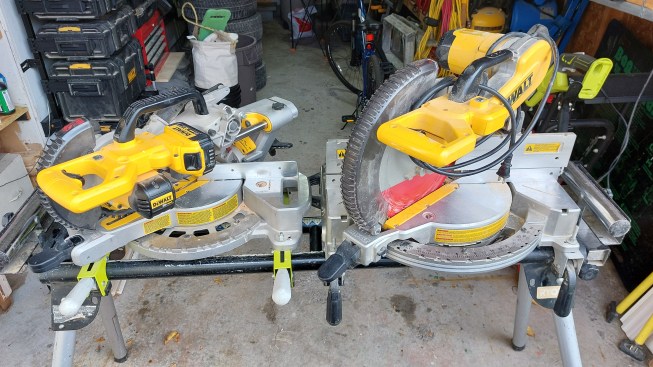
The DeWalt DCS361M1, with its open side grips and a top handle, is easy to move around a jobsite. Note the difference between the 7 ¼- and 12-inch saws. Not every job needs the biggest tool.
Cutting capacity is 8 inches for straight cuts and 5 ¾ inches at 45 degrees. Usually, this was enough for casing and baseboard or window jamb extensions. For shoe molding or small applique, the saw really stood out. I could move from floor to floor or even room to room much quicker than with a larger saw.
I purchased the DeWalt as a backup saw, for which purpose it worked perfectly. It does not replace my larger saw. One reason is that the smaller saw bevels in only one direction. This was once standard, but if you are accustomed to a double-bevel saw, it takes a moment to orient the material.
I also found that the blade doesn’t have a high rate of spin, so on hardwood trim or some larger pine, I have gotten tear-out on the back. Chipping has been an issue with laminate flooring, melamine, and finish plywood, too. In those cases, I needed to score or back-cut the material to ensure a clean finish.
This is a smaller, lightweight saw for smaller, lighter-weight work, which it does well. I’ve worked this saw for a few years and have not had any issues with reliability (unlike my larger unit, which I’ve needed to replace brushes on and regularly check for square). As a light, portable, and reliable saw to get through occasional trim or to backstop my main miter saw, this unit has earned its cost for me.
The DCS361M1 kit with battery and charger costs $440; the DCS361B (bare tool) costs $350. dewalt.com
Keep the conversation going—sign up to our newsletter for exclusive content and updates. Sign up for free