Tim Uhler
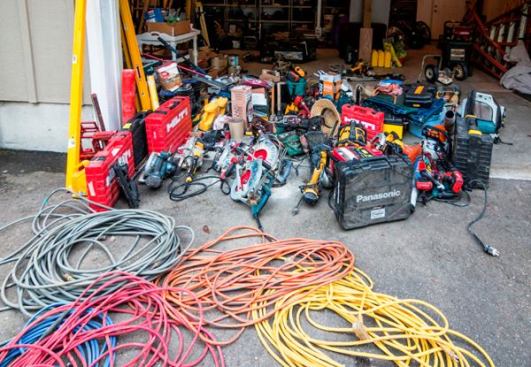
This is just a portion of what came out of the back of our box t… This is just a portion of what came out of the back of our box truck. You know how it is; you put more and more in and pretty soon you’re hauling an entire shop full of tools. There’s so much stuff it’s hard to find what you are looking for and you don’t even know what all you have
Tim Uhler
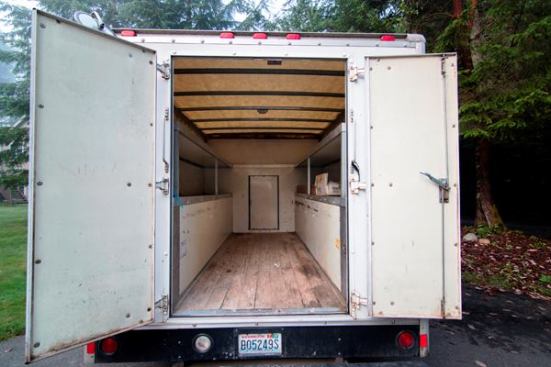
An empty truck is an empty slate. We decided to be picky about w… An empty truck is an empty slate. We decided to be picky about what went back into ours because more isn’t always better.
Tim Uhler
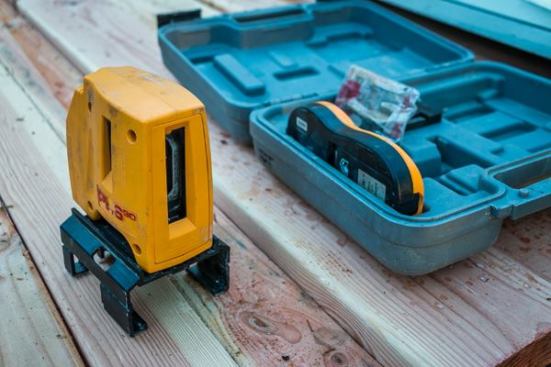
We have been using a Pacific Laser Systems PLS90E since 2007 fo… We have been using a Pacific Laser Systems PLS90E since 2007 for foundation work and shooting square layout onto the deck. This self-leveling laser is a real time saver. Because it shoots lines 90° from each other that project onto both horizontal and vertical surfaces, we can use it to lay out stepped foundations—either for the dirt work or for laying out pony walls on a walk-out basement or stepped foundation. We also use it to transfer layout from the floor to a vaulted ceiling to avoid snapping lines on the vault, which reduces the amount of time we spend on a ladder.
Tim Uhler
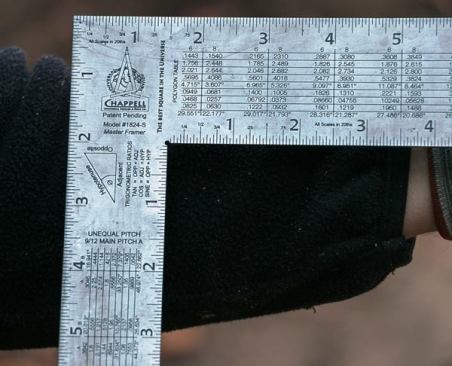
I’ve had plenty of different framing squares, but Chappell’s… I’ve had plenty of different framing squares, but Chappell’s have useful features and are very high quality (and they’re made in the USA). I like the Master Framer model because it is 18 by 24 inches long. The extra 2 inches of tongue length really makes a difference. The 18:24 proportion is the same as a 9:12 and we cut that slope frequently. This lets me mark across an entire 2×10 or 2×12 without having to extend the line. We have been doing more and more exposed beam work and need a small square we can trust. Their 9×12 Center Square is very accurate and just the right size for 8x Doug fir beams that don’t need a huge square to lay out.
Tim Uhler
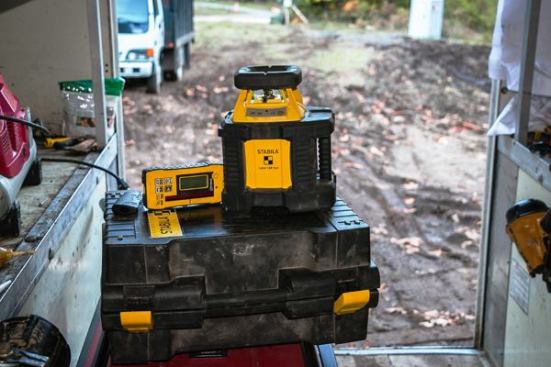
For shooting level, we use a Stabila LAR250 self- leveling rota… For shooting level, we use a Stabila LAR250 self- leveling rotary laser with a detector and a remote. We use it to shoot our foundations in level, find dirt grade, and establish control points. We can also use this level on its side to shoot square layout and adjust it using the remote. This is a rugged, high-quality product.
Tim Uhler
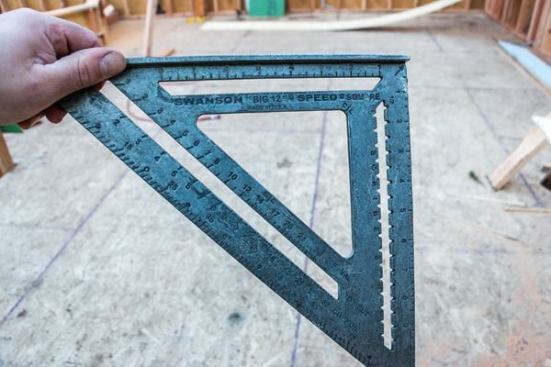
We have a couple of Swanson 12-inch Speed Squares for scribing … We have a couple of Swanson 12-inch Speed Squares for scribing cut lines on 2x10s and 2x12s, I-joists, and beams. As a general purpose marking square, this size of Swanson’s iconic tool is very convenient and useful.
Tim Uhler
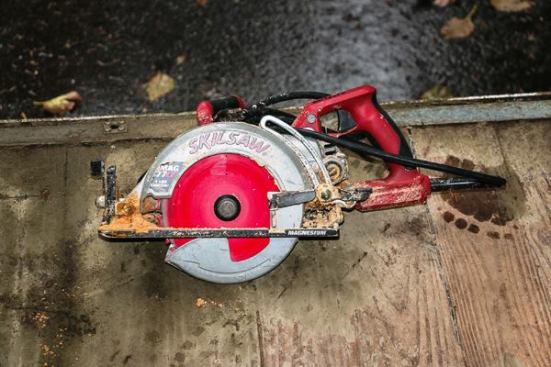
We have a lot of saws we keep in the truck, but the Skil Mag 77… We have a lot of saws we keep in the truck, but the Skil Mag 77LT is our current favorite because it’s very light.
Tim Uhler
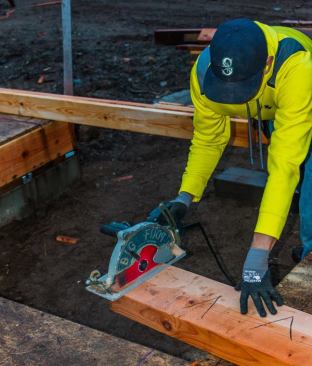
For deeper cuts we have a 10 1/4-inch Big Foot Saw head mounted… For deeper cuts we have a 10 1/4-inch Big Foot Saw head mounted on a Bosch body. We also have the larger 14-inch Big Foot but we rarely use it. One good trick we’ve found with these saws is that spraying a friction-reducing dry coating on the blade makes deep cutting much easier. We use Dri-Cote.
Tim Uhler
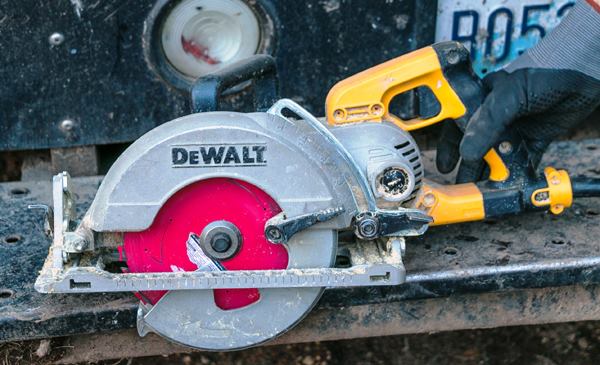
Of our many saws, the DeWalt DWS535 wormdrive saw is one that w… Of our many saws, the DeWalt DWS535 wormdrive saw is one that we’ve relied on since 2010. We love this saw and its large sturdy fence (not shown).
Tim Uhler
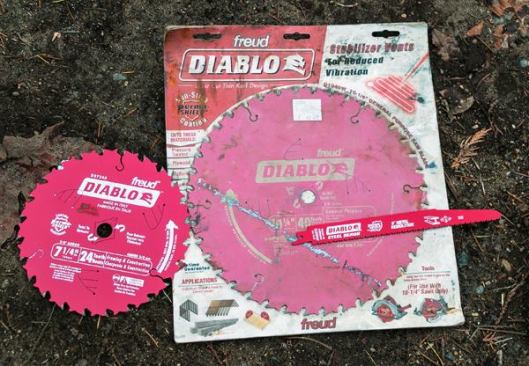
We have been using Diablo circular saw blades since 2004 and bu… We have been using Diablo circular saw blades since 2004 and buy them in packs of 10. Prior to that, we used Marathon and Matsushita blades. We’ve tried other blades as they come out but always go back to Diablo. Their blades last, and the red coating does seem to make them cut more smoothly. We use a 10 1/4-inch Diablo blade on our larger saw.
Tim Uhler
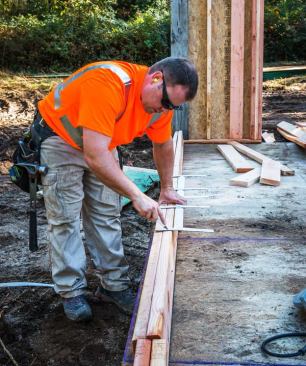
We use a Big Foot Layout Stick for wall layout, and it saves us … We use a Big Foot Layout Stick for wall layout, and it saves us a ton of time. About as fast as I can walk along the wall I can mark the stud layout 4 feet at a time. And we don’t worry about accumulated error—for us it’s a good thing because it lets us gap our wall sheathing panels without planning for it. Leapfrogging the layout stick accumulates a slight error equal to the pencil line thickness every 4 feet so our layout constantly grows a hair for the needed gap. The studs end up at 4 feet, 8 feet 1/16 inch, 12 feet 1/8 inch and so on. The older welded-tongue model we prefer is no longer available from Big Foot Tools but I found similar models from McDonald Manufacturing and Best Construction Tools.
Tim Uhler
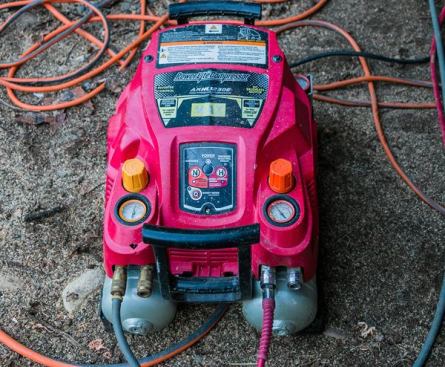
In 2008 we bought into the Max high pressure system and we haven… In 2008 we bought into the Max high pressure system and we haven’t looked back. There were just two of us framing on the crew and we wanted to go lighter with our pneumatic tools, especially because we use coil framers, which are heavier than stick guns. The AKHL123OE compressor (since superseded by the newer AKHL 1250E) has regulators and outlets for both high pressure (500 psi) and standard pressure (100 psi) tools so it will power every nailer we have in the truck.
Tim Uhler
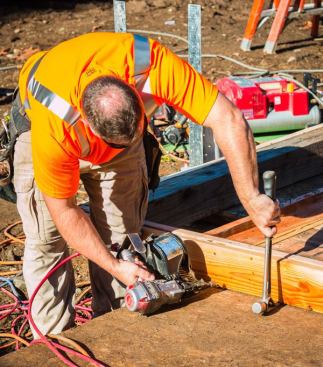
We like using coil framers because they hold more nails which de… We like using coil framers because they hold more nails which decreases the downtime of reloading. We have two Max HN90 high pressure coil framing nailers that have been very reliable. They are light, powerful and never break down. We replaced one seal on one of the guns and that’s all the maintenance we’ve done. Despite the wear on the outside, when the tool was opened up the inside was extremely clean—an indication that the internal filter really did its job.
Tim Uhler
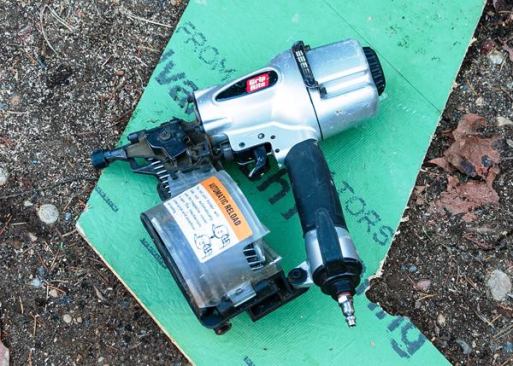
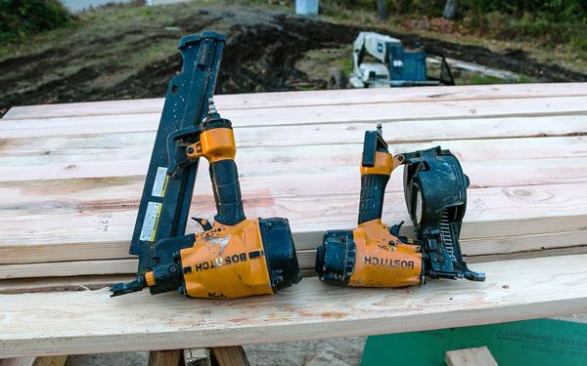
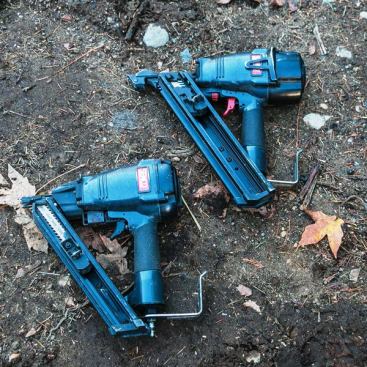
For siding and trim we use compact, regular pressure guns like t… For siding and trim we use compact, regular pressure guns like this Grip-Rite GRCTS250. We also use a similar Bostitch N66C (right hand tool in the next slide). Both guns are light and have belt hooks. They are just right for shooting 7d nails into siding and trim—nails which are too small to fit in our framing guns. While it’s possible to use larger nails to attach siding, the big heads don’t look good.
Tim Uhler
We also keep a regular pressure Bostitch LPF21PL (on the left) … We also keep a regular pressure Bostitch LPF21PL (on the left) stick nailer in the truck for shooting galvanized framing nails. We use a stick nailer for this because hot dipped galvanized stick nails are cheaper and easier to find than HDG coil nails.
Tim Uhler
Along with all our framing and siding guns, we also carry two m… Along with all our framing and siding guns, we also carry two metal connector nailers. We have used multiple brands but the Senco Joist Pro 150XP and Joist Pro 250XP are our favorites. We hang a lot of hardware per house and these guns save time. Besides their good performance, we also appreciate the large swivel belt hooks that come standard on these tools.
Tim Uhler
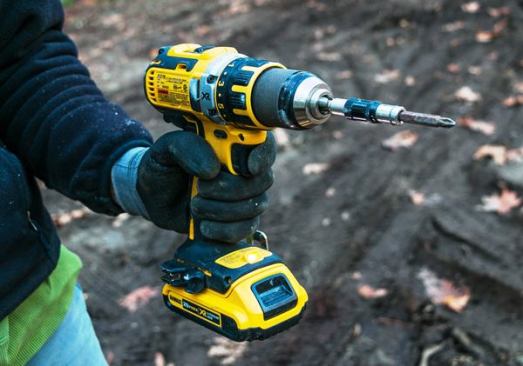
For much of our smaller drilling needs (5/8 inch or less) and fo… For much of our smaller drilling needs (5/8 inch or less) and for hanging doors we use a compact DeWalt 20v brushless drill/driver. We use it with either full size or compact battery packs but the lightweight benefits of the compact tool are more apparent with the smaller packs. We have gathered an eclectic collection of cordless tools and if we had to start over, we would probably stick with tools from just one of our favorite brands. Having tools that all use the same batteries would make things somewhat easier.
Tim Uhler
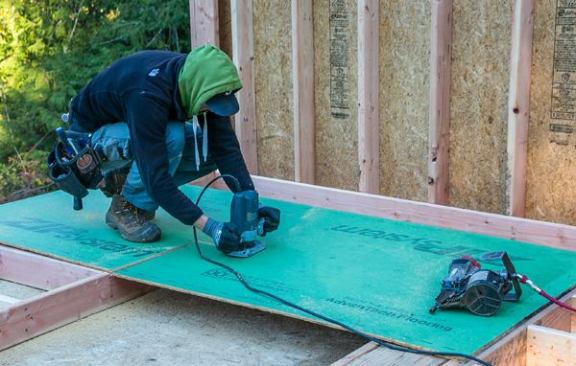
Plunge Router. It doesn't take long to sheath walls, but cutting… Plunge Router. It doesn't take long to sheath walls, but cutting out door and window openings can really slow you down. At various times we’ve used circular saws (too much layout), recip saws (slow; makes rough cuts), and chainsaws (dangerous; makes a terrible mess). For the past 10 years we’ve used a plunge router with a flush cut bit. It’s fast, requires no layout work, and leaves a smooth flush edge at the openings.
Tim Uhler
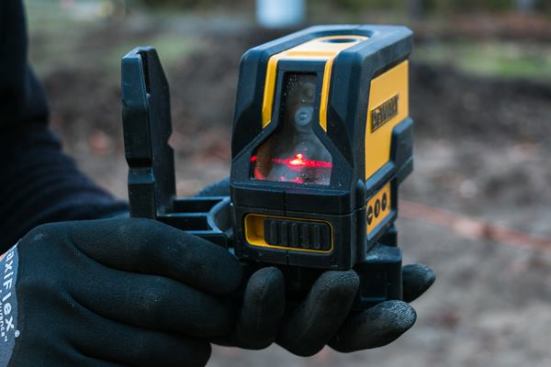
When our last laser plumb bob died, we suddenly realized how oft… When our last laser plumb bob died, we suddenly realized how often we reached for it and how much time it had been saving us. We replaced it with a DeWalt DW0822 which we’ve been using all year with no complaints. It is as good as any we’ve used, and sells for a reasonable price. This type of tool is a must-have for us because we frame a lot of tall walls and rakes; we routinely need to plumb 20-foot walls. Another common use is for transferring layout onto ceilings. The tool also projects a level line, which is handy for hanging a series of windows or shooting level for porch columns.
Tim Uhler
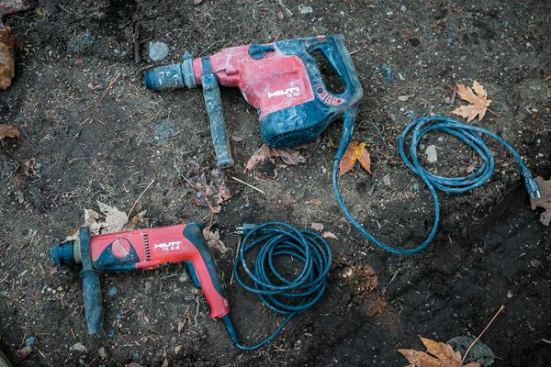
We keep a couple of Hilti rotary hammers for drilling concrete, … We keep a couple of Hilti rotary hammers for drilling concrete, the TE 2-S and TE 76P (since replaced by the TE 70). Whether we need to drill for wedge anchors, threaded rod, or just a post base, we drill into concrete on every house. We get the most use out of the smaller TE2 as it is capable of making the holes we need in the relatively green concrete we usually encounter. Our typical anchor and threaded rod holes are 5/8 or 3/4 inch in diameter and seven to 10 inches deep. We keep the TE76 around for when we need to make holes larger than 1 inch such as when we drill a 3-inch hole through a concrete patio or stem wall to connect a downspout.
Tim Uhler
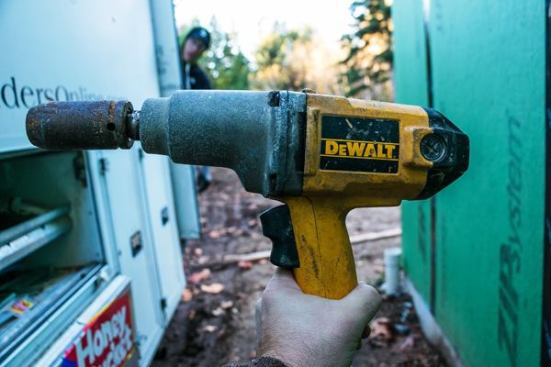
We have a 10 year old DeWalt electric impact driver (no longer m… We have a 10 year old DeWalt electric impact driver (no longer made; since replaced by DW292). Often we can get a nut started but have difficulty twisting it past damaged threads. This wrench can power the nut right past. With so much power we have to be careful to avoid over-torqueing so we typically finish tightening by hand.
Tim Uhler
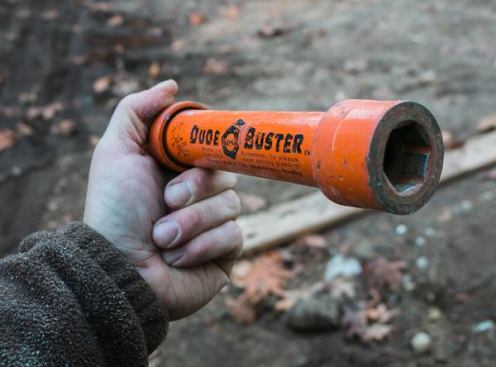
To avoid stocking various length bolts, we frequently fasten bea… To avoid stocking various length bolts, we frequently fasten beam hardware with threaded rod. We tighten the nuts with an impact wrench and a Dude Buster deep socket. The extra length of the Dude Buster lets us spin the nut tight without having to cut off the excess threaded rod or bolt.
Tim Uhler
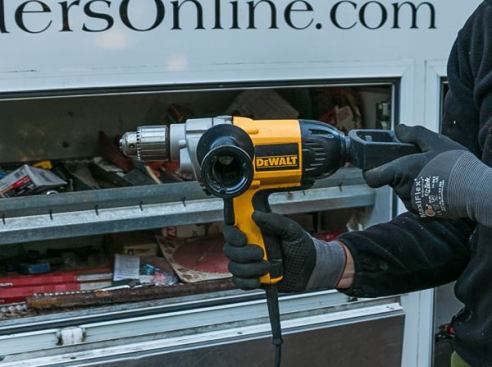
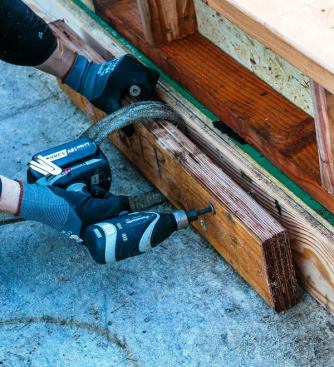
Our 10 year old DeWalt DM130V corded drill died about six month… Our 10 year old DeWalt DM130V corded drill died about six months back so we bought another one. We use this drill to bore holes for J-bolts, or for through-bolts on some hangers. For 3/4-inch holes through a glulam we are glad to have the extra torque. And when we need to bore larger holes using hole saws we have to use this corded drill because we don’t have a cordless drill stout enough to make 3-inch holes through plate material and subflooring.
Tim Uhler
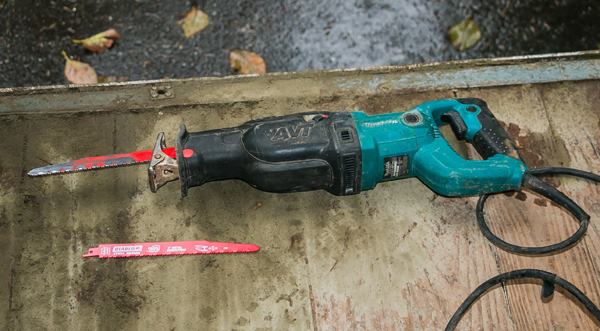
Makita makes a great corded reciprocating saw and we’ve been u… Makita makes a great corded reciprocating saw and we’ve been using ours ( JR3050T) since 2005. This saw is an animal and cuts very quickly.
Tim Uhler
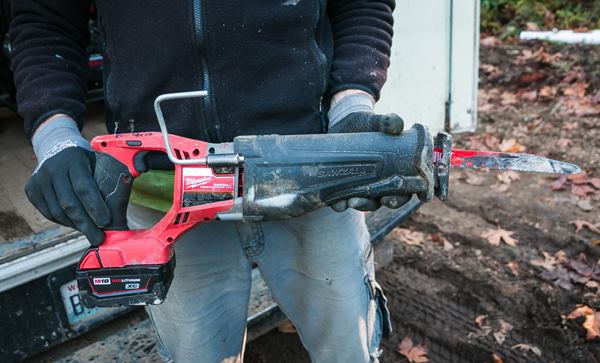
Our corded recip saw has long been the go-to tool for cutting th… Our corded recip saw has long been the go-to tool for cutting through wood, wood with nails, and even for threaded rod. But since we got a cordless Milwaukee M18 Fuel recip saw ( 2720-22), we now use it most of the time. This saw has proven more than powerful enough for most of our needs, and working without a cord is so convenient.
Tim Uhler
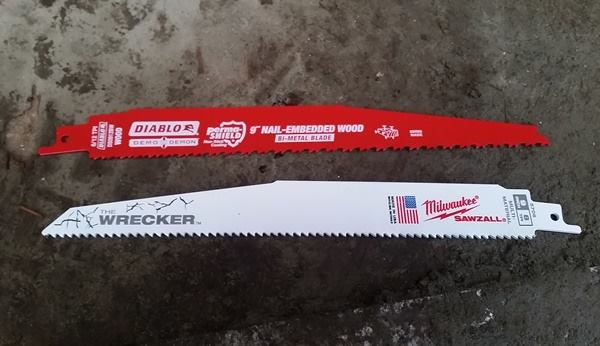
As for recip saw blades, we like the Freud Diablo Demo Demon. W… As for recip saw blades, we like the Freud Diablo Demo Demon. We’ve found that this blade lasts, plus the lumberyard we order from stocks it. Milwaukee Ax blades are good too. Normally, either one of these wood/nail cutting blades will last us an entire house. For metal cutting, we buy whatever blades are cheap because about the only metal we cut (besides nails) is threaded rod.
Tim Uhler
We use a Panasonic cordless impact wrench ( EY7551) with a 1/2-i… We use a Panasonic cordless impact wrench ( EY7551) with a 1/2-inch socket drive end along with an included bit holder that converts the tool into a standard 1/4-inch bit impact driver. Because of its drive versatility, we can use the tool to drive large anchor nuts as well as the 3 5/8-inch LedgerLok and 6- and 8-inch TimberLok screws we commonly use.
Tim Uhler
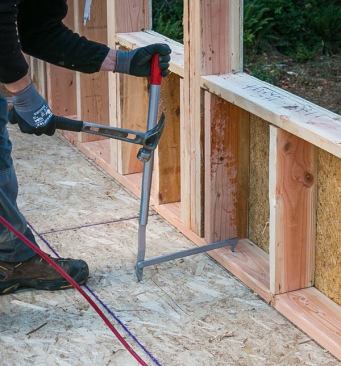
We use wall pullers to straighten bowed plates prior to nailing … We use wall pullers to straighten bowed plates prior to nailing them down. Drive one tip into the plate and the other into the subfloor and then push or pull on the handle. A bunch of companies make them; this one is from Qualcraft.
Tim Uhler
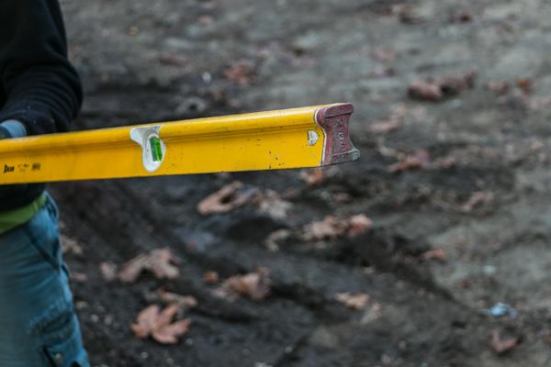
We have an assortment of Stabila levels but the 72-inch R Beam … We have an assortment of Stabila levels but the 72-inch R Beam and 24-inch R Beam levels are the ones we use most. I use the 72-inch model as a level and for marking sheet goods before cutting. It works well as a straightedge for drawing lines because it's stiff and won't deform when pressed against a bowed piece of plywood or OSB.
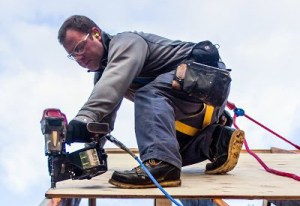
During a recent lull between projects we decided to clean out the box van we take to the jobsite. We could not believe how much stuff was packed into the truck! After seeing the shop full of tools that came out of the truck, we decided to think carefully about what went back in. In the process of doing this we compiled our own must-have tool list for framing and exterior finish work. This story highlights some of the most essential tools in our arsenal—ones that don’t live in my tool bags. For a look at what I carry in my tool bag, see the related article Framer’s Everyday Carry.