Sixth-generation family employee Ryan DeArment holds a billet of…
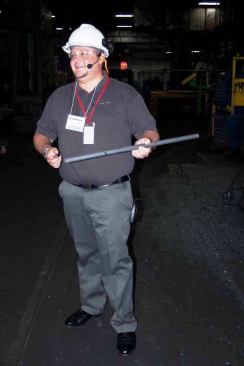
Sixth-generation family employee Ryan DeArment holds a billet of C1080 alloy steel where all Channellock tools get their start.
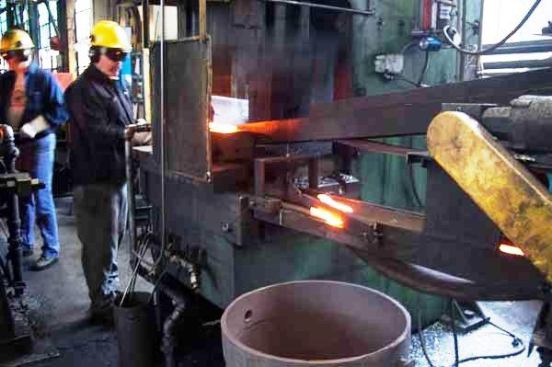
A massive die-forging machine used to form pliers parts out of a…
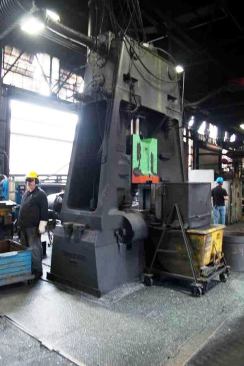
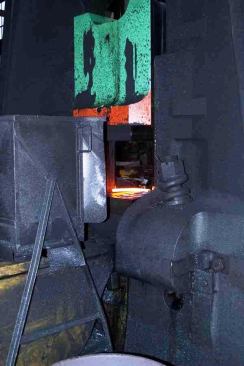
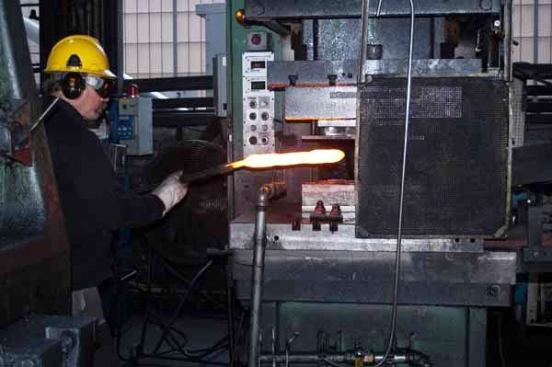
A massive die-forging machine used to form pliers parts out of a yellow-hot billet of steel.
The machine hammers out the parts with nine tons of pressure whi…
The machine hammers out the parts with nine tons of pressure while bouncing the ground floor of the factory like a continuous earthquake.
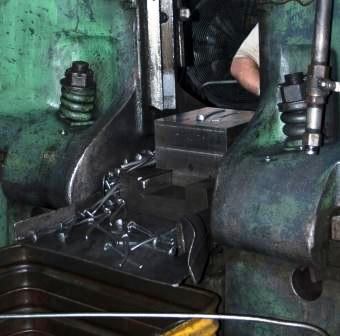
Seconds after forging, the rough parts are separated from the sc…
Seconds after forging, the rough parts are separated from the scrap metal on a trim press.
The parts are diverted into bins by the lower conveyer belt whil…
The parts are diverted into bins by the lower conveyer belt while the scrap metal rides the upper belt into a large hopper to cool.
After forging, holes are created in the pliers parts by a large …
After forging, holes are created in the pliers parts by a large punch press.
Precise mating joint surfaces must be milled into the pliers.
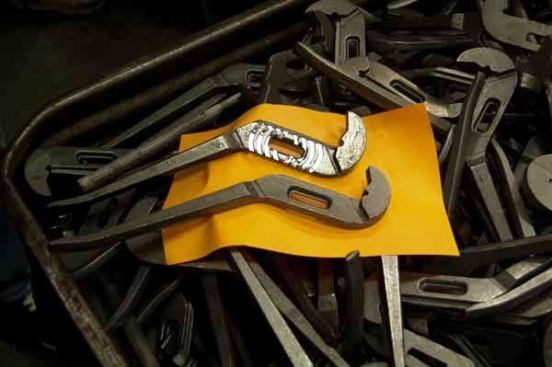
The angled grooves in these tongue and groove pliers would be im…
The angled grooves in these tongue and groove pliers would be impossible to form with a forging process.
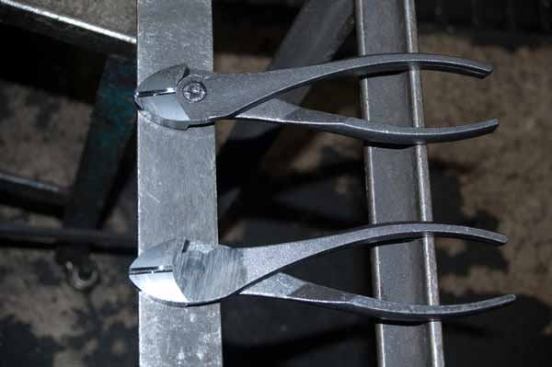
After milling the joint surfaces and shaping the cutting edges, …
After milling the joint surfaces and shaping the cutting edges, the two halves of a tool are riveted together and the rivet is ground flush as shown on these diagonal cutters.
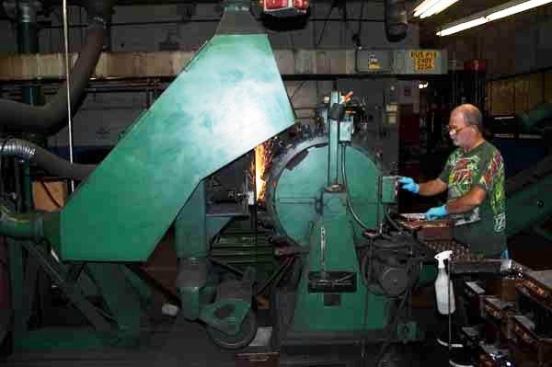
A mechanized grinding process in action.
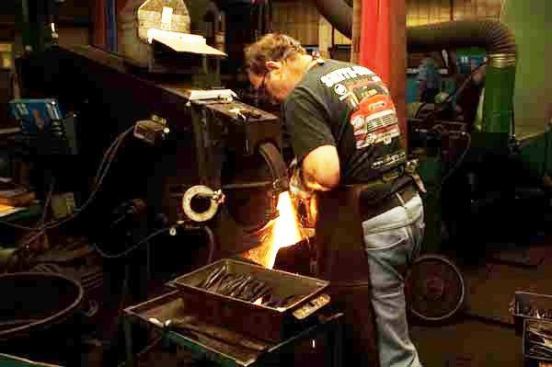
Hand grinding the heads of pliers for a finished appearance.
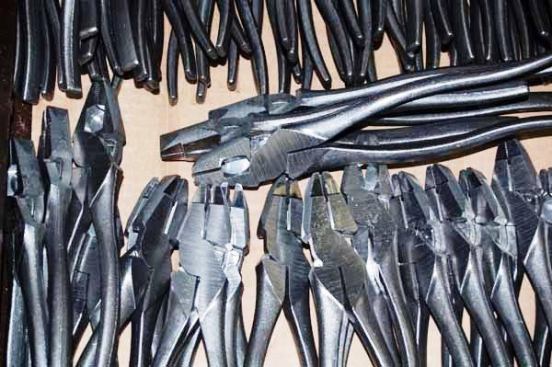
Assembled linesman pliers after finish grinding.
Pliers' thin cutting edges are laser-hardened (a process I wasn'…
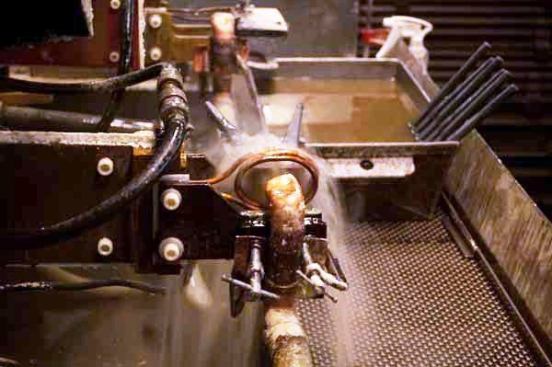
Pliers' thin cutting edges are laser-hardened (a process I wasn't allowed to photograph), but radio frequency hardening is used to harden the entire head of some tools like these nippers.
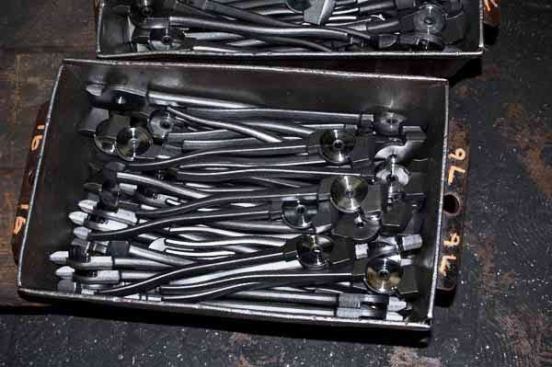
As part of the heat-treating process, large batches of pliers ar…
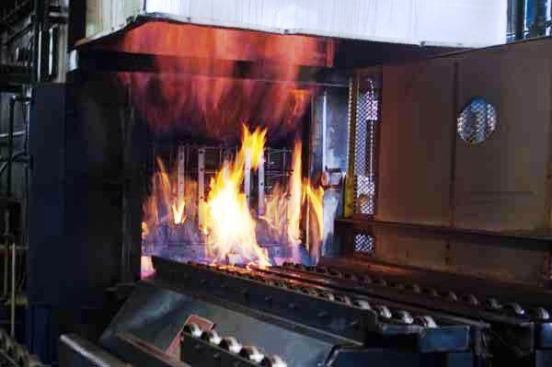
As part of the heat-treating process, large batches of pliers are run through a fiery furnace.
Skilled "filers"? inspect and adjust the cutting edges and joint…
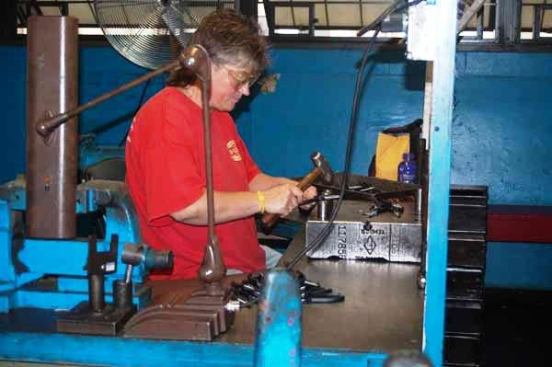
Skilled "filers"? inspect and adjust the cutting edges and joints of the tools and make fine adjustments by hand if needed.
Pliers drying after their dip into molten plastic handle materia…
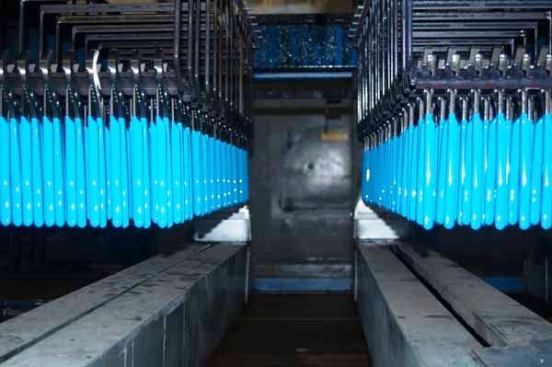
Pliers drying after their dip into molten plastic handle material.
This summer I visited the Channellock factory in Meadville, Pennsylvania and got a close up look at good old fashioned American tool manufacturing. They allowed me take photos so I’m sharing them here…
The company was founded in 1886 by a blacksmith named George B DeArment and is owned and operated by the 4th and 5th generations of his family. It makes 125 kinds of pliers and cutters here in the US but is best known for the tongue and groove pliers it developed in the 1930s — that came to be known as channel locks. The pliers were so popular that the company changed its name to Channellock.
During my visit to the factory in Meadville I got to see a variety of tools being made. Click on the slideshows above for photos of the production process (16 photos).
Michael Springer specializes in tool testing and construction industry coverage. While not wielding a chain saw, axe, or drawknife for rustic woodworking projects, Michael seeks out and restores antique hand tools to add to his extensive “user tool” collection. Outside of the shop, Michael is a passionate rock drummer and pipe band drummer who enjoys both performing and teaching.