
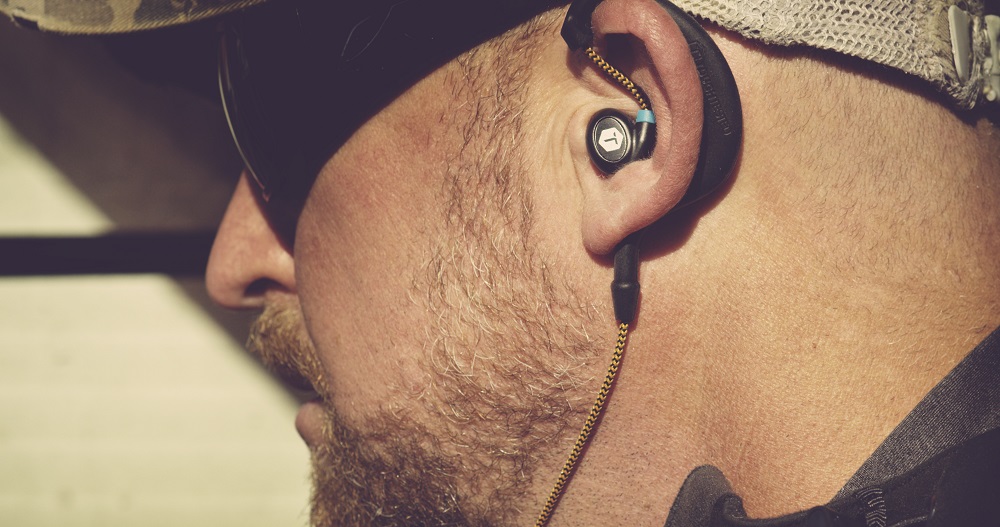
Back when I first started out as a carpenter, hearing protection was a bit of a novelty. This was in the days before online shopping and big-box home centers, when our local lumberyards only stocked bulky over-the-ear headphones (if anything). Eventually, sleeker and easier-to-wear gear began to appear on the lumberyard racks, and while I tried a number of different types, I didn’t use any of them religiously. I wish I had, though.
I can’t tell you that I’ve “lost” my hearing, but I know it’s not as good as it was. I have trouble with conversations in noisy restaurants, and recently I’ve become aware of a constant low-grade ringing – called tinnitus – when it’s quiet. Sure, my symptoms could be age-related or hereditary, but I suspect that years of exposure to various types of saws and motors haven’t helped. One thing I do know is that I’m not alone: More than 35 million Americans suffer from hearing loss.
The ear is a pretty amazing assembly. If you’re like me, you have a vague sense that the ear drum is the main component in the hearing mechanism. But it turns out the real key to converting the pressure waves in the outside environment into the nerve impulses that your brain interprets as sound are “hair cells” in the inner ear. These cells are topped with delicate bristle-like structures called stereocilia, which produce electrical signals in response to vibrations in the cochlea, where the hair cells live. These cilia are vulnerable to damage from a number of different causes, including sudden very loud sounds, frequent exposure to elevated sound levels, aging, and even certain kinds of drug therapy. When it happens, the damage is – at least up to now – irreversible (to read more about research into hearing loss, see “High-Tech Hope for the Hard of Hearing”).
Experts say that you’re at a high risk of hearing loss when exposed to noise levels that exceed 85 dB on a regular basis. How loud is that? Well, I’m told that noise from my lawn tractor is about 95 dB (I almost always wear headphones when operating it, and make my kids wear them too). A jackhammer generates about 130 dB; circular saws often exceed 100 dB. Heck, even a normal conversation measures around 55 to 65 dB. OSHA’s personal exposure limit (PEL) is 85 dB for an 8-hour day.
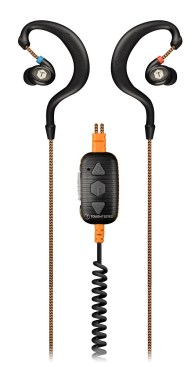
ToughTested Jobsite noise-reducing earbuds with mic and volume control.
Which gets me to my point: You can prevent hearing loss later in life simply by wearing hearing protection now, starting while you are young. Anything is better than nothing, but if you want to compare the effectiveness of different types of hearing protection, check out the device’s noise reduction rating, or NRR. 3M’s foam earplugs, which at about $20 for a pack of 200 from Amazon are cheap and pretty effective, have a 29 dB NRR (which seems to be on the high side for in-the-ear type protection). That means that they reduce a 100 dB noise to a more reasonable 71 dB.
By spending a little more, you can buy hearing protection that allows you to also listen to music or talk on your phone while you work. The folks at Tools of the Trade have reviewed a number of different types of corded and wireless earplug headphones recently.
For max protection, over-the-ear headphones seem to have the highest noise reduction ratings. I’m pretty happy with the basic ear muffs that I use with my tractor and chain saw, though I’ve had mixed success with the radio-equipped versions. The best ones seem to be those designed for the shooting range, where the sound from a single gunshot can permanently damage unprotected ears. Some of them have up to about a 37 dB NRR. The best type of hearing protection? The kind that you’ll actually use.
