"If I could own just one cordless drill/driver," says …
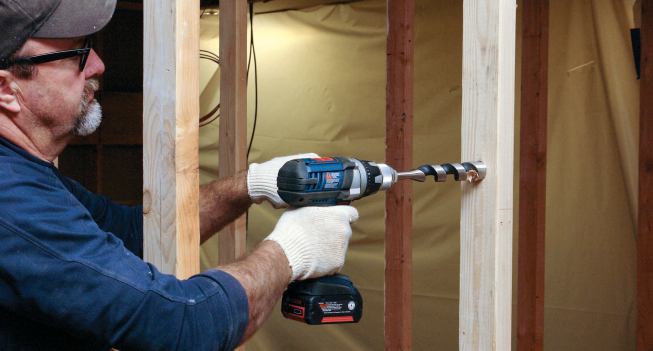
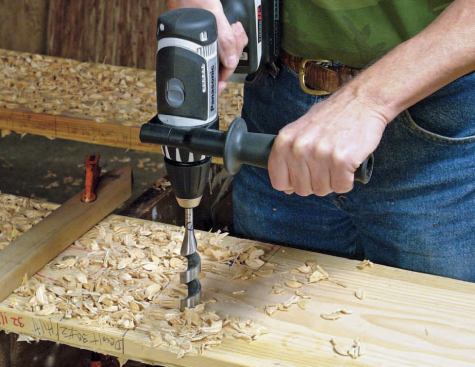
"If I could own just one cordless drill/driver," says the author, "it would be a full-size 18-volt lithium-ion model." A Bosch DDH 181-01 is pictured above, and there are many other choices within the class, including lighter-weight compact models.
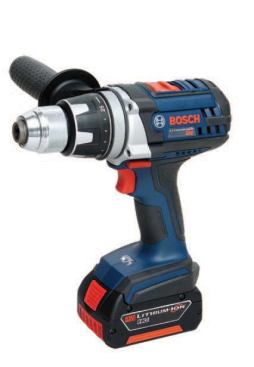
Bosch DDH181-01
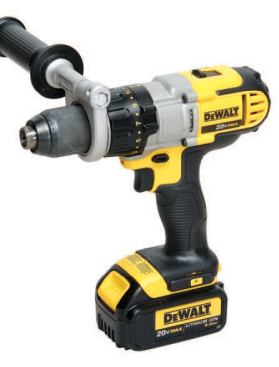
DeWalt DCD980L2
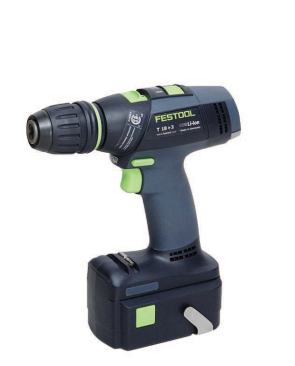
Festool T 18+3 Set
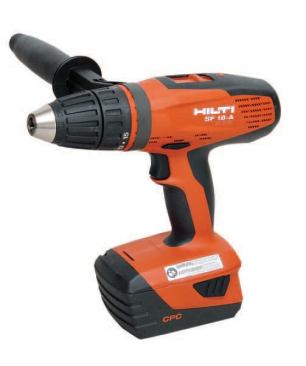
Hilti SF 18-A CPC
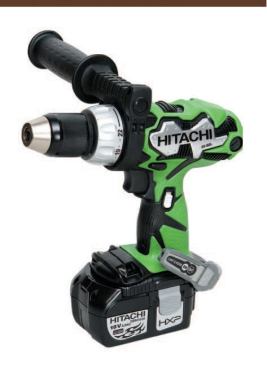
Hitachi DS18DL
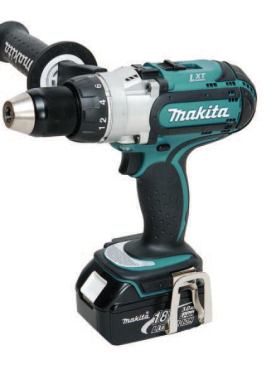
Makita BDF451
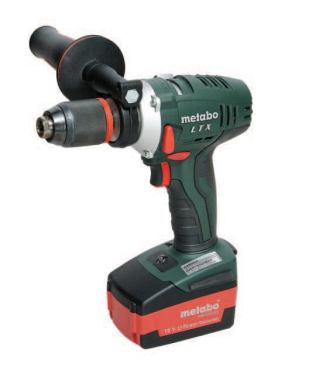
Metabo BS 18 LTX
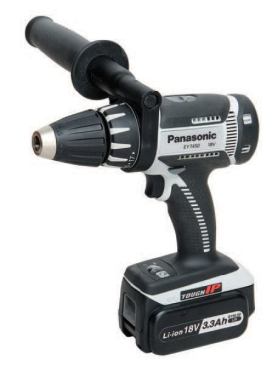
Panasonic EY7450LR2S
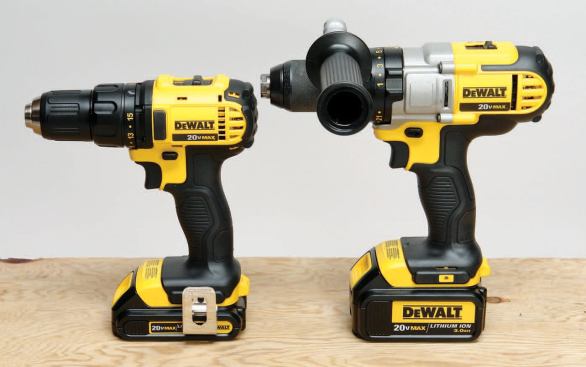
Full-size 18-volt drill/drivers can be significantly bigger and …
Full-size 18-volt drill/drivers can be significantly bigger and more powerful than their compact 18-volt counterparts. For instance, DeWalt recommends using auger bits up to 1-1/4 inches and hole saws up to 4 inches in diameter with its premium 20V Max (right), but the numbers drop to 7/8 inches and 2 inches, respectively, for its compact 20V Max (left). That’s why most compacts don't have side handles.
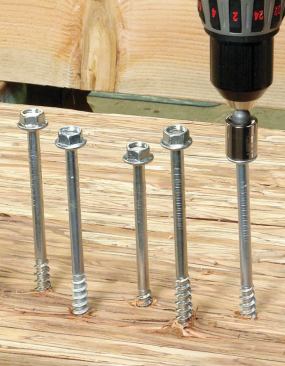
To size up the balance between maximum torque and overload prote…
To size up the balance between maximum torque and overload protection, the author drove four 1/2-inch by 8-inch Spax lags as deep as possible into a PSL beam with each tool, then compared the average depth of penetration.
The author tested for runtime by counting the number of holes ea…
The author tested for runtime by counting the number of holes each tool could drill through 2-by Douglas fir per charge in low gear with a 1-inch Irwin Speedbor solid-center auger bit. All of the drills averaged over 100 holes per charge.
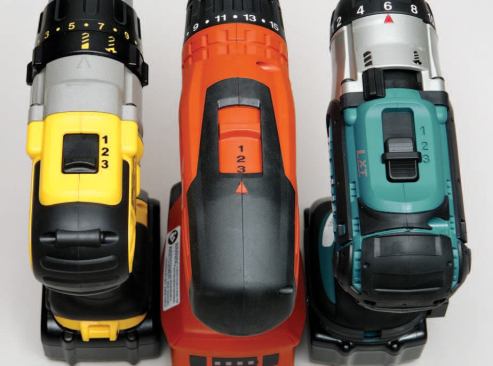
Three-speed trannies. The DeWalt, Hilti, and Makita (left to rig…
Three-speed trannies. The DeWalt, Hilti, and Makita (left to right) have a three-speed — rather than the usual two-speed — transmission. Makita’s extra gear adds a second low-speed option for drilling big holes and other high-torque applications, while DeWalt’s and Hilti’s add a second high-speed option for less demanding applications like small-diameter drilling in metal.
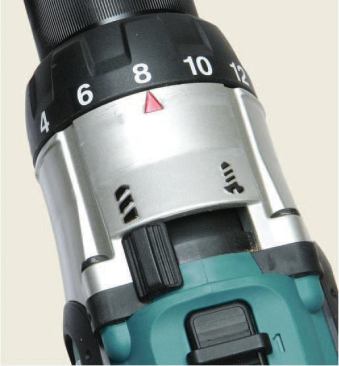
Drill/drive switches. The Makita (shown), DeWalt, Festool, and M…
Drill/drive switches. The Makita (shown), DeWalt, Festool, and Milwaukee allow you to switch between drilling and driving without losing your clutch setting.
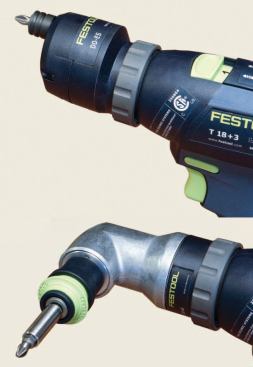
Festool attachments. The complete Festool kit includes FastFix o…
Festool attachments. The complete Festool kit includes FastFix offset and rightangle attachments for working in tight quarters.
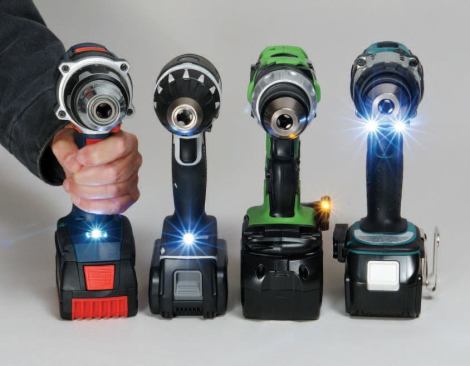
Headlights. All the tools except the Hilti have LED headlights, …
Headlights. All the tools except the Hilti have LED headlights, all of which illuminate the point of a standard spade bit with no shadows. From left: Bosch's trigger-activated light is in the base so the chuck won't cast a shadow on your target when you’re using short bits. Panasonic's basemounted light turns on and off with a push button and shuts itself off after the tool idles for five minutes. Hitachi's push-button amber light is built into the belt hook and requires separate batteries. It automatically shuts off in 15 minutes. Makita's topmounted, switch-activated light stays on for about 10 seconds after you release the trigger.
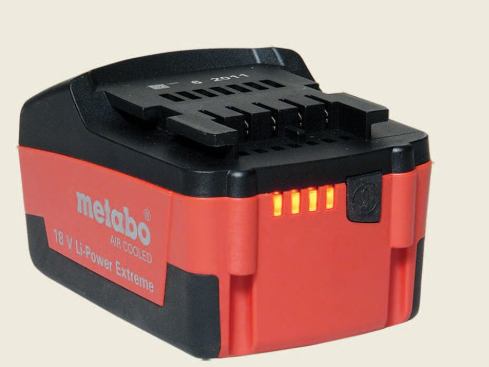
Battery gauges. Bosch, Festool, Hilti, Metabo, and Milwaukee hav…
Battery gauges. Bosch, Festool, Hilti, Metabo, and Milwaukee have onboard battery gauges so they won’t quit right after you crawl into an attic. Festool’s gauge is located on the back of the tool, while the rest are located on the batteries so you can check their charge on or off the tool.
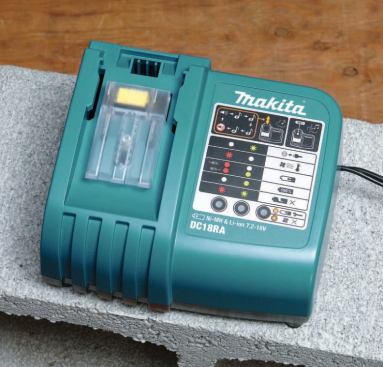
Chargers. All nine battery chargers are diagnostic, but some are…
Chargers. All nine battery chargers are diagnostic, but some are faster and more sophisticated than others. Makita’s fancooled 30-minute charger indicates an 80 percent charge so you can finish a job without waiting unnecessarily, and you can select a beep or a ring tone that announces a full charge. A spring-loaded plastic cover protects the terminals.
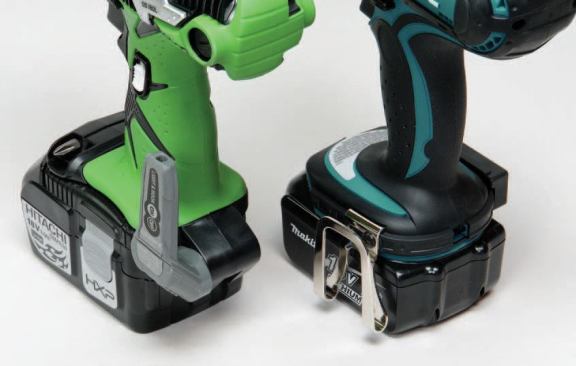
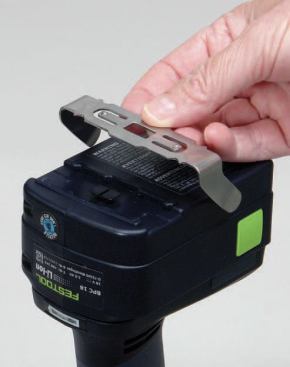
Belt hooks. Only the Festool, Hitachi (left), and Makita (right)…
Belt hooks. Only the Festool, Hitachi (left), and Makita (right) come with belt hooks; DeWalt and Milwaukee sell them separately.
To adjust Festool’s dual battery-mounted version, you simply s…
To adjust Festool’s dual battery-mounted version, you simply slide it back and forth.
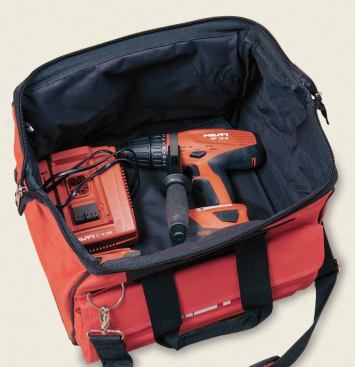
Contractor bag. Hilti's kit includes either a plastic case or an…
Contractor bag. Hilti's kit includes either a plastic case or an optional contractor bag. The bag is roomy enough to store plenty of big drill bits and other tools, and it can hold the drill/driver with the side handle attached so you don't have to keep installing and removing it. You also don't have to waste time tucking in the charger cord, as you do with most plastic cases.
If I could own just one cordless drill/driver, it would be a full-size 18-volt lithium-ion model. Priced at about $260 and up, these muscular tools ship with 3-amp-hour or larger batteries for extended runtime and weigh 4.2 to 5.5 pounds. (Their compact 18-volt cousins, by comparison, weigh 3.3 to 4 pounds and cost about $150 and up.) Armed with one of these 1/2-inch models, I can power my hole saws, midrange auger bits, or the biggest spade bits all day if necessary without pushing the limit. I can also sink long deck and structural screws when an impact driver isn’t readily available.
Ideally, I’d pair this tool with a 12-volt subcompact, a category I tested for JLC several months ago (“12-Volt Drill/Drivers,” 6/11). Subcompacts weigh just 2.6 pounds or less and can ride in a toolbelt or a pocket, yet can repetitively drill holes up to about 3/4 inch in diameter. Together, the two tools can comfortably handle almost any drilling job I encounter.
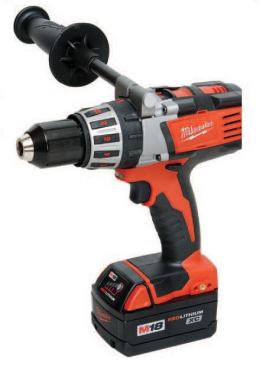
For this article, I evaluated nine full-size 18-volt drill/driver kits: the Bosch “Brute Tough” DDH181-01, the DeWalt “20V Max” DCD980L2, the Festool T 18+3 Set, the Hilti SF 18-A CPC, the Hitachi DS18DL, the Makita “LXT” BDF451, the Metabo BS 18 LTX, the Milwaukee “M18” 2610-24, and the Panasonic “Tough IP” EY7450LR2S. After driving long screws and drilling several thousand big holes, I’ve sized up their overall performance and features.
Capacities
All the owner’s manuals give drilling capacities, but only DeWalt and Milwaukee break them down for specific types of drill bits. DeWalt says its tool can comfortably power auger bits up to 1 1/4 inches, spade bits up to 1 1/2 inches, self-feed bits up to 2 9/16 inches, and hole saws up to 4 inches in diameter; in metal, it can power 1/2-inch twist drills and 1 3/8-inch hole saws. Milwaukee’s recommendations are more conservative: auger bits up to 1 inch and hole saws up to the lockset-boring size of 2 1/8 inches in wood. In the manuals that list driving capacities, the maximum recommended diameter for wood screws ranges from about 1/4 to 3/8 inch.
After putting the tools through my trials, I think those numbers are in the ballpark. Equipped with a 1 1/2-inch spade bit, all the tools easily bored holes through 2-by Douglas fir in second gear (third gear in the uniquely configured Makita) in about 8 to 15 seconds. They also propelled my 2 1/8-inch bimetal hole saw at high speeds and my 4-inch one at low speeds through 3/4-inch plywood sheathing and 2-by Douglas fir, though the 4-incher could take awhile and quickly drain the batteries.
I really pushed the envelope with auger bits. Again using 2-by Douglas fir as my material, I started by drilling a bunch of holes in low gear with 1-inch and 1 1/4-inch Irwin Speedbor solid-center auger bits. As expected, this was no problem for these tools. They also easily drilled the holes at higher speeds, but in the long run that would put more wear and tear on the drive trains. Next, I exceeded manufacturers’ recommendations and tried a 1 1/2-inch nail-eating Irwin Speedbor ship-auger bit, followed by a 1 3/4-incher. The tools all chewed through the 2-by without stalling or shutting themselves off to prevent overloading. I couldn’t resist stepping up to a 2-inch Speedbor ship-auger bit (the biggest diameter available) just to see what would happen. After starting a hole with the Bosch Brute Tough, which seemed capable, I stopped right there, concerned that my wrists might be the first casualty. When it comes to drilling the bigger holes, these cordless tools are no substitute for a corded drill with a safety clutch.
All nine models also had enough power to sink Simpson Strong-Tie’s new .22-inch by 10-inch multipurpose structural wood screws into an LVL/LSL/PSL sandwich without pilot holes. (See “Comparative Specs” table for Drill/Drivers on pages 2 and 3 of the PDF.)

 (963kb)