After a long stretch of planning, back-and-forths, and some inevitable delays, we’re finally in a position to begin the Attainable Zero project for the Abel family. It’s an exciting place to be, even though we’re about four to five months behind where we originally hoped to be. The important thing is: we’re here now, and we’re ready to go.
In This Series:
Attainable Zero: A JLC Case-Study Home
Attainable Zero: Building to ZERH Standards
Attainable Zero: Preconstruction Begins
Building in the Unknown: Pushing Forward with Attainable Zero
Attainable Zero: Permits and Preconstruction
Attainable Zero: In the Ground
Attainable Zero: Building the Bones of the House
Preconstruction Agreement
As with all of our projects, this one started with a preconstruction agreement. We treat preconstruction as a stand-alone separate contract agreement for the essential planning work like drawings, engineering, HVAC design, surveying, and staking out the house. That fee isn’t applied to the construction cost. It’s a service fee, pure and simple. We made that change at Addison Homes a few years back to avoid misunderstandings. Historically like many smaller builders we used to apply all the preconstruction fees toward the total build cost. But, every once in a while, projects fell through and when clients walked away, things got contentious.
Our current preconstruction contracts make it clearer for everyone involved. We provide the services, they pay for the services, and if they decide not to build, we part ways fairly.
The real goal, though, is alignment. We want to work with people who share our values and who are as committed to sustainable, thoughtful building as we are. The preconstruction phase is the ideal time to verify that commitment with the potential client. We start by building a relationship and our first question isn’t whether we can meet their budget it’s whether their goals and ours line up. If they do, then everything else flows more smoothly.
For the Abels, having already built a house for them, we know our goals are aligned and it makes everything in the process smoother, and more fun! But, even with a great homeowner onboard and clear objectives, it’s still homebuilding, so you have to expect the unexpected and roll with it.
Permitting Process
Permitting here in unincorporated Greenville County isn’t the same beast as in some other areas. We can get a permit within a week. In the city of Greenville and other municipalities, it’s a different story. If you’re building within city limits, many regulations come into play, including requirements to retain all stormwater on the site via subsurface retention! It’s a complex, calculated system, and it adds time and cost to the build. The permitting process within the city can take upwards of 6 weeks for all regulatory approvals, and if any one department kicks it out, it goes back to the beginning again.
Fortunately, we’re building this home in the county, so requirements are more straightforward. For example, we only need a county building permit and an approved septic permit. We’ve already secured the septic permit, which required a soil classifier to perform soil analysis and design the system based on site conditions.
Water. One hiccup we did run into was with water quality. The site previously had several mobile homes, and there were two existing wells, one functioning and the other abandoned. When the Abels requested a water quality test, it triggered a deeper inspection. The active well had no documentation, no flow rate, depth, or pump data, and the water test showed traces of potential contamination, including a slight elevation in lead and an indicator that suggested possible sewage proximity. Nothing exceeded EPA action levels, but enough to warrant caution. We consulted with the homeowners and agreed on a whole-house filtration system, which will address the issue easily and affordably.
Radon is another factor we always plan for. Greenville County is South Carolina’s only Level 1 radon County, so we’re required by code to install a passive soil gas venting system. We go a step further and pre-wire for an active fan, just in case the system needs to be upgraded. It’s part of our DOE Zero Energy Ready strategy, which includes Indoor airPLUS certification. We always install a passive soil gas venting system, regardless of code or radon zone.
Slab vs. crawlspace. Originally, we were planning an elevated slab foundation, but we’re now considering switching to a conditioned crawl space. The slab would have added time to the schedule, and the crawl space could be faster while offering excellent performance. Our conditioned crawlspaces are fully sealed with a durable, multi-layer vapor barrier and insulated with either rigid foam or closed-cell spray foam. With the stable soil temperature, a crawl space can be a huge benefit in both summer and winter, especially for cooling loads.
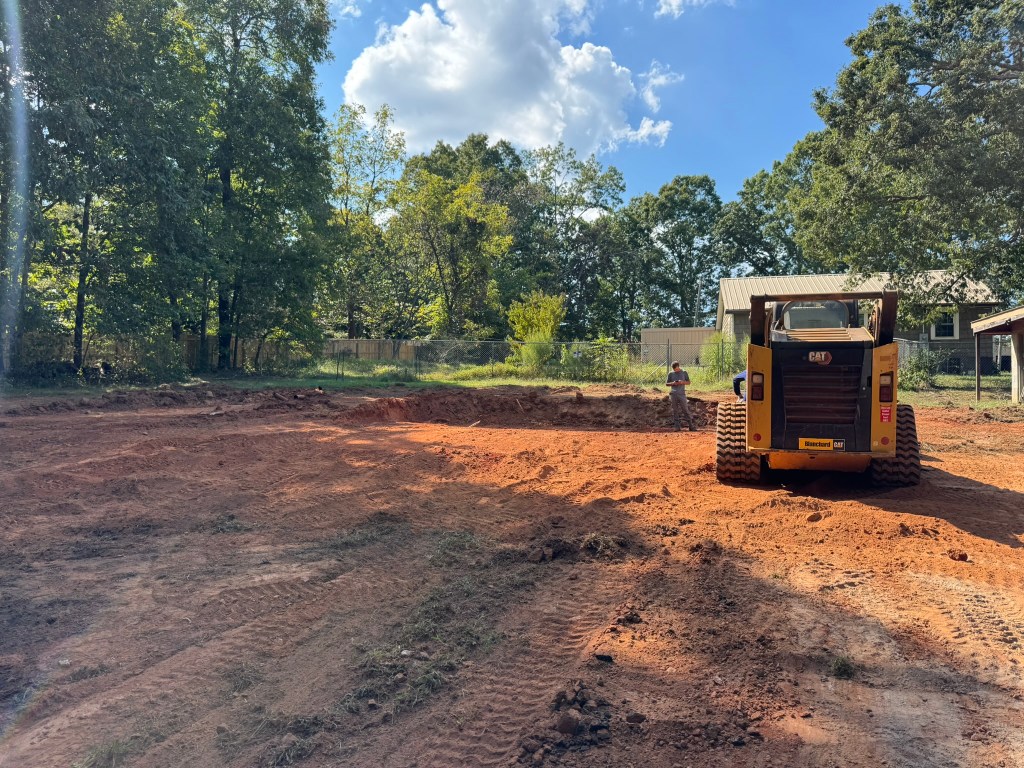
So now, it’s time to clear the site, shape the grade to improve drainage, and get to work on footings and foundations. We’ll be managing runoff with careful grading regardless of the foundation type, and if we go with a crawl space, we’ll also install a perimeter foundation drain and waterproof the walls. We’re ready to go. The Abels are ready to go. And this project is about to move from preconstruction to full construction. That’s a milestone worth celebrating.