
Charles Wardell
The author demonstrates the weaving details that set his jo…
Weaving a Valley
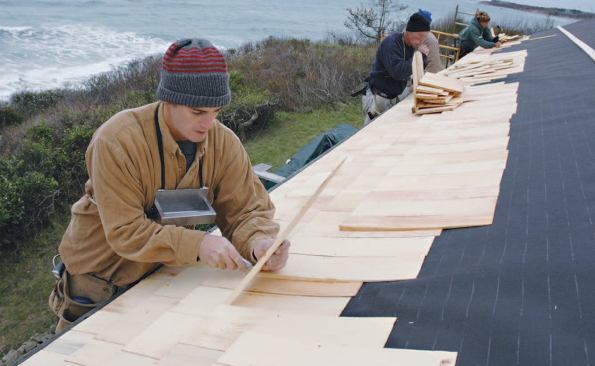
I prefer open valleys with metal flashing, especially on shallow roofs. An open valley lets water flow out more easily, minimizing the chance of leaks and extending the life of the valley shingles. However, some customers – including the owners of this house – want the woven look. Weaving a valley takes time, but the end result blends nicely into the roof.
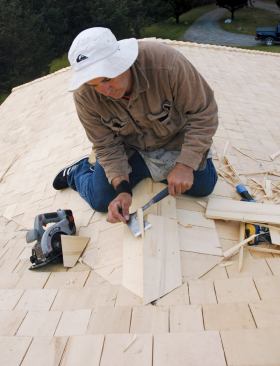
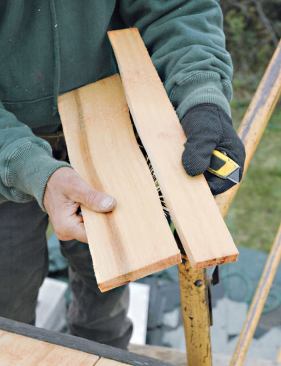
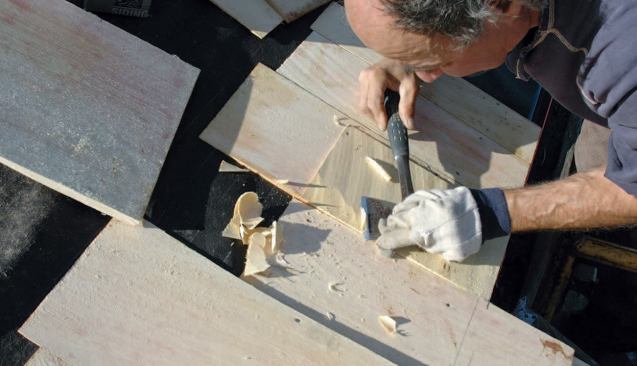
We use a portable table saw to put a compound angle on the butts of the valley shingles (see slideshow). They’re mitered to match the angle between the course lines and the valley line, and the blade is set to 45 degrees, creating a bevel that lies flat against the roof.
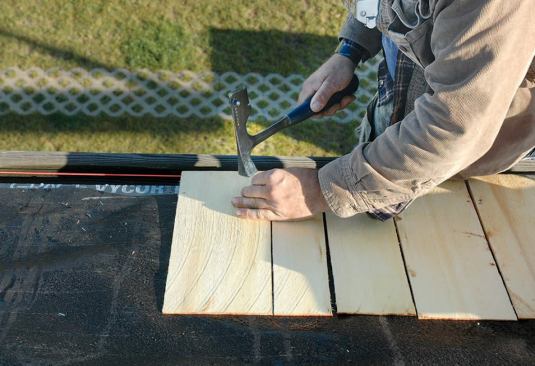
Every opposing pair of valley shingles gets step-flashed with lead-coated copper, which I precut into 12-inch squares at the shop, then bend with a brake to match the roof pitch.
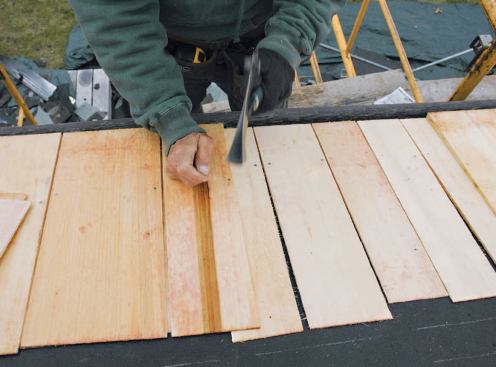
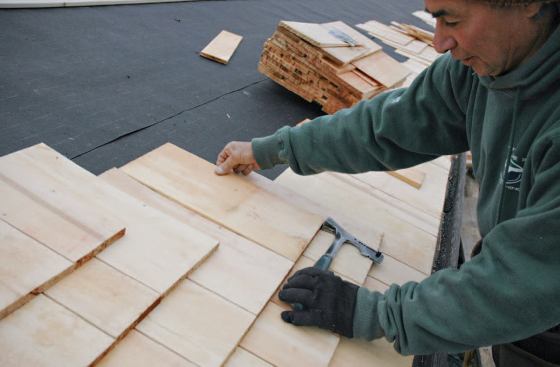
Each valley has a double starter course consisting of two layers of shingles and two layers of flashing. So I’ll put down a piece of flashing, a pair of shingles, another piece of flashing, and another pair of shingles. This process continues right up the valley. Some roofers will flip-flop the valley shingles, starting with the left-hand shingle on one course, the right-hand shingle on the next course, and so on. The theory is that doing this keeps debris from clogging the seam and trapping water. I prefer to put the same side down first all the way up, as it makes for a straighter line. I’ve had no problem with clogged seams.
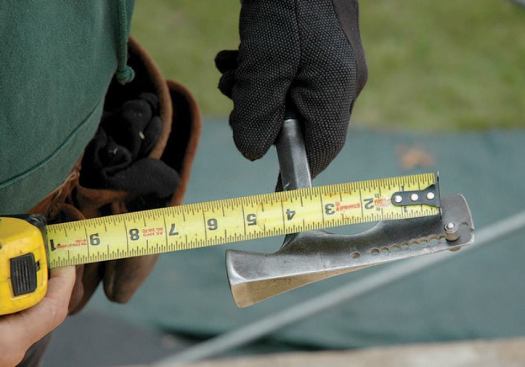
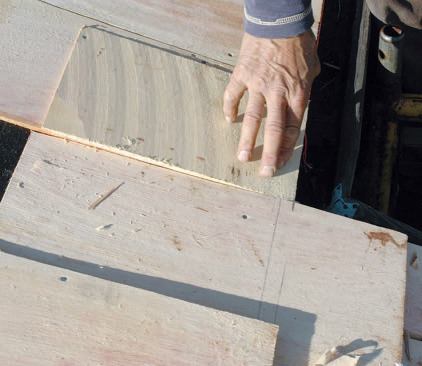
Note that the valley shown here did not end right at the inside corner of the two roof planes. This small offset created a slight height difference where the valley shingles meet the field shingles of the higher roof. I spent a few minutes feathering the upper surface, using a couple of shim shingles and the hatchet blade. Where the valleys die into the upper roof, we install metal flashing first, followed by peel-and-stick rubber, then apply a standard ridge cap.